

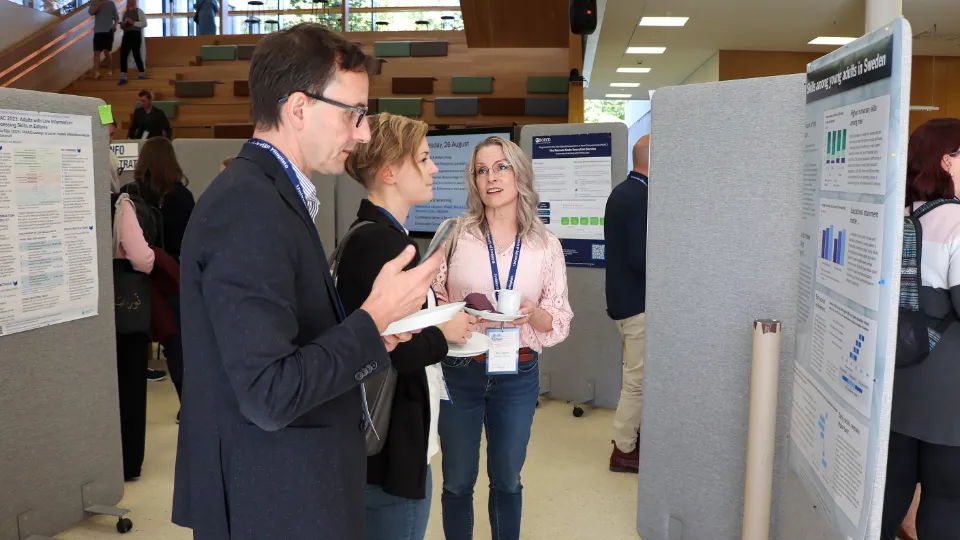
Across the Nordic-Baltic countries, researchers are using PIAAC data to better understand how skills are developed, maintained and used throughout adulthood. New research posters prepared for the Nordic-Baltic PIAAC Conference 2026 showcase findings on young adults, migration, education and literacy, demonstrating the breadth of current PIAAC research in the region.
Education matters, but it does not explain everything
In Estonia, education was identified as the strongest protective factor against low literacy skills. Swedish analyses showed that numeracy skills are strongly associated with both individuals’ own education and their parents’ educational attainment. However, a Norwegian study found that increased participation in education explains only around 15-22% of the improvement in young adults’ skills, indicating that other factors also contribute to skill development.
Skills continue to develop throughout life
A Swedish study found a clear link between school grades and adult numeracy skills. At the same time, one-quarter of those with the lowest grades later achieved proficiency levels equivalent to Level 3 or higher, demonstrating that learning pathways remain open beyond compulsory schooling.
Different groups face different challenges
The Estonian poster highlighted higher risks of low literacy skills among older adults, low-educated individuals and those with weaker language proficiency. Swedish research pointed to the importance of migration history, age at arrival and educational background for skills development among foreign-born adults. These findings underline the value of targeted approaches rather than one-size-fits-all solutions.
Explore the posters
Researchers, policymakers and practitioners can explore the posters below and learn more about how PIAAC data are being used to support evidence-informed policy and research across the Nordic-Baltic region.
Conference posters
- Norway: Decomposing Skill Change among Young Adults in Norway (pdf)
- Estonia: PIAAC 2023: Adults with Low Information-Processing Skills in Estonia (pdf)
- Sweden: Skills among Young Adults in Sweden (pdf)
- Sweden: Skills among Foreign Born in Sweden (pdf)
For researchers working with PIAAC data across countries
Researchers interested in cross-country comparisons now have new opportunities to work with international PIAAC data through the OECD’s Remote Code Execution (RCE) Service.
Find materials from the Nordic-Baltic PIAAC conference here.