

The meeting took place in Aarhus, 21–23 October 2026
Ageda for meeting day 1
16.30 Welcome and presentation of the ALFA Council members
17.30 The portfolio method in Danish Language Education 1, presented by Cecilie Olsen
18.00 Follow-up research on the portfolio method, presented by Susana Fernández
18.30 A teacher’s experiences of the portfolio method, presented by Louise Kristensen
19.00 Plenary discussion
The Danish DU1 (Danskuddannelse 1) is aimed at adult migrants with little or no previous formal education, who often need to develop basic reading and writing skills alongside their second-language development.
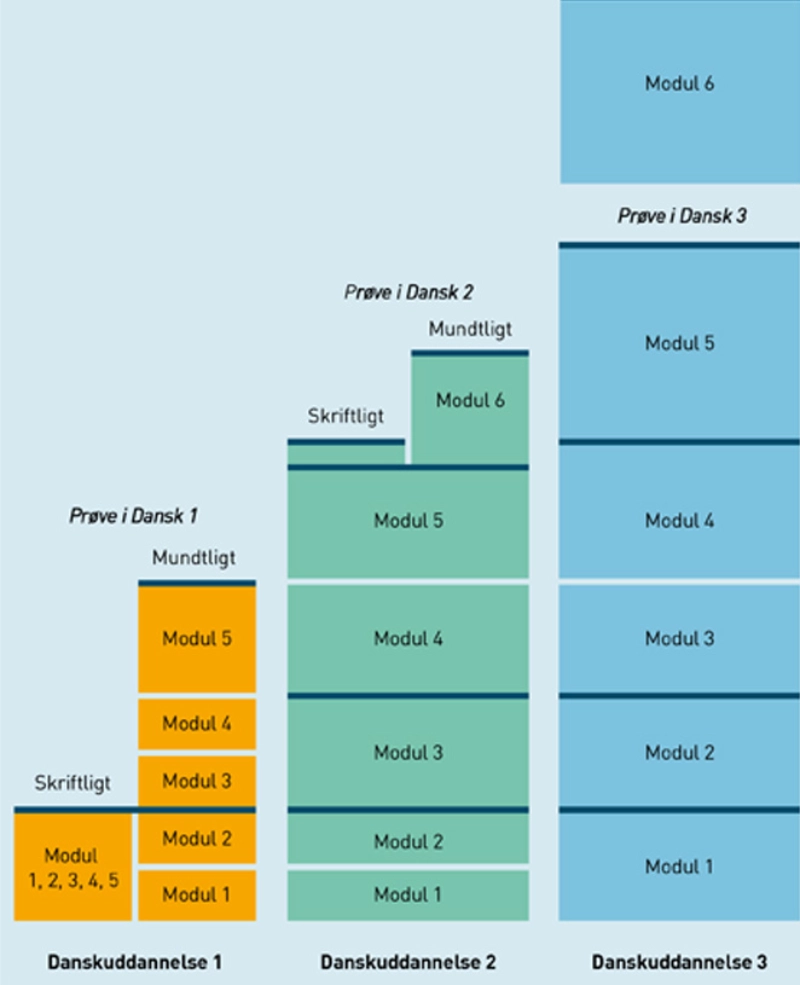
In Denmark, municipalities are responsible for providing Danish language education for adult foreigners. Each municipality decides whether to provide the education through a municipal language centre or to enter into an agreement with an external provider, such as a private language centre. Danish language education is therefore provided by both municipal and non-municipal language centres, including private and self-governing institutions.
A national portfolio system has now been introduced for Study Route 1
The portfolio system is new and was developed by two ALFA Council members on behalf of the Danish government: Cecilie Løsecke Olsen, Chief Consultant at SIRI, and Susana S. Fernández, Professor and PhD at Aarhus University.
The following documents relating to the portfolio method were presented:
- A brief description of the portfolio method in Danish Language Education 1 (DU1) (on the SIRI website): Om portfoliometoden på DU1 / Dansk og Prøver
- Guidelines for using the portfolio method in teaching Danish Language Education 1 (on the SIRI website): vejledning-om-portfoliometoden-i-undervisningen-paa-du1.pdf
- A toolkit for teachers on using the portfolio method in DU1 (on the SIRI website): Værktøjskasse til portfoliometoden på DU1 / Dansk og Prøver
- The Red Book: A role-based portfolio for non-literate immigrant language learners from Amsterdam, by Annemarie Nuwenhoud et al.
- Article on follow-up research: Implementing a Portfolio Approach in Danish Language Education for Adult Migrants with Limited Schooling, by Susana I. Fernández and Astrid Mus Rasmussen.
The meeting also included an introduction to the new Danish Language Examination 1 (Prøve i Dansk 1), including examples of the oral examination, in which candidates use products from their portfolios as a basis for communication:
- A video recording of a candidate taking the oral examination.
- An example of an examination portfolio (the candidate’s three portfolio products, which she brings to the oral examination).
- An example of the reading comprehension test.
- An example of the written production test.
- Guidelines for Danish Language Examination 1 (Prøve i Dansk 1 – PD1) – SIRI’s final examination guidelines for the new test. Chapters 4–5, in particular, may be relevant, as they deal with the oral portfolio examination (CEFR A2+).
During the first afternoon of the meeting, presentations were given on the development and implementation of the portfolio method by Cecilie Løsecke Olsen, Susana I. Fernández and Louise Kristensen, a teacher from one of the institutions involved in piloting the method.
Louise Kristensen teaches in Danish Language Education 1 and has extensive experience of working with the portfolio method. She took part in SIRI’s pilot project and contributed to developing and adapting the method to Danish conditions. She shared her experiences and presented examples from her teaching.
School visit
Ageda for day 2
08.30 Welcome at AOF Job & Dansk and presentation of the program
09.00 Classroom observation (Group 1) and discussion with a teacher (Group 2)
11.15 Dialogue with school management and teachers
13.00 Learners present their portfolio folders
15.00 Plenary discussion
The visit to AOF Job & Dansk included classroom observations, discussions with teachers and meetings with the principal and the manager responsible for the programme. Their perspectives on the portfolio-based teaching approach provided valuable insights and learning opportunities for the participants.
Following the visit, a plenary session was held at the university. Participants reflected on their observations and experiences of teaching and learning through the portfolio model. They also compared the learning needs and teaching approaches for this target group in their respective countries from a didactic perspective.
News and reports from ALFA Council members
Agenda for day 3
09.00 Short presentations by ALFA Council members: a representative from each member country presents the national provision for the LESLLA target group in their country.
10.30 ALFA Council meeting, including a discussion on how to share experiences and what type of event to organise for Nordic LESLLA teachers.
Based on questions distributed in advance, representatives from Finland, Norway, the Faroe Islands and Sweden presented the current situation in their respective countries.
The following questions were addressed:
- Who is the target group for the provision? How is it organised?
- Does it include both young people and adults?
- How much education can LESLLA learners access (in terms of duration and number of teaching hours)?
- Which curriculum applies to this target group?
- Are there any nationally established teaching methods, organisational frameworks or teaching materials for this group?
Many questions were raised concerning both the opportunities and limitations facing LESLLA learners, as well as possible future restrictions in our respective countries. Participants highlighted a general trend towards more restrictive policies and regulations affecting adult migrant education in several Nordic countries, although the situation varies between countries.
Plans for 2027
Finally, plans for 2027 were discussed, and two forthcoming webinars were agreed upon.
The first webinar will focus on the new Danish portfolio model and the Action-Oriented Approach, which ALFA Council members work with in Denmark and the Faroe Islands, and which is also used to a large extent in Nationellt Centrum för Svenska som Andraspråk´s (NC) online course I Sweden, where LASLLIAM provides the platform.
The second webinar will focus on how LASLLIAM is used as the foundation for NC’s online course for practicing teachers working with Study Route 1, as well as the new course (2027 01 01) on Basic Reading and Writing Instruction.
Participants in Aarhus
- Caroline Estephan (Sweden)
- Cecilie Løsecke Olsen (Denmark)
- Elisabeth Holm (Faroe Islands)
- Monica Lindvall (Sweden)
- Sanna Voipio-Huovinen (Finland)
- Sigridur Vilhjalmsdottir (Norway)
- Susana S. Fernández (Denmark)
- Vigdis Lahaug (Norway)
Participating online Day 2:
- Laura Eilola (Finland)
- Absent: Sólborg Jónsdóttir (Iceland)