


“Learning takes place in the individual in their interaction with the outside world,” says researcher Dorothy Sutherland Olsen at the Nordic Institute for Studies in Innovation, Research and Education (NIFU).

A great deal of learning takes place in most workplaces, particularly among new employees. But the way management facilitates both daily learning and other initiatives to enhance competence is a decisive factor.
“For businesses that have deprioritised training and facilitating informal learning over time, the consequences can be severe,” says Olsen.
What is the best form of learning in the workplace?
In a research project on learning in the workplace and employees over the age of 50, Dorothy Olsen asked managers and staff what they considered to be the best form of learning.
“Managers responded that courses arranged by the organisation itself were the best, while staff felt they learned most effectively by addressing specific issues and sharing experiences. For managers responsible for ensuring that staff skills and competences remain up to date, courses are easier to document and measure; it’s also easier to keep track of the time and costs involved. The question is whether this actually gives the best learning,” says Olsen, who holds a PhD in workplace learning. She has participated in several projects on learning in working life and is currently involved in ongoing research for a Nordic project testing the use of learning circles in public-sector workplaces within health and care – work she carries out with Ulrik Brandi, a researcher at the Danish School of Education, Aarhus University (DPU), Aarhus University.

Job-related courses prioritised in the workplace
“Does the research, taken as a whole, tell us anything about which types of training are prioritised in the workplace: formal, non-formal or informal?”
“Yes, the research does indeed tell us something about this. European survey data (such as Eurostat’s Adult Education Survey) reveals that learning supported by employers is primarily non-formal and job-related courses. At the same time, the distribution is unequal. Employees with higher levels of education receive more training than those with less formal education – a phenomenon often referred to as the ‘Matthew effect’,” points out Brandi.
From individual to shared competences
“Do we know what is prioritised: learning at the individual level or at the organisational level?”
“Research points to learning at the individual level receiving the most attention and the greatest share of resources, typically in the form of courses and continuing education. Nevertheless, the two levels are closely interconnected. What is often under-prioritised is the link between them: ensuring that what an individual has learned is put into practice and shared with colleagues, thereby becoming a shared competence. Research has long shown that much of what is learned on courses is never applied in the workplace if no time or support is given to do so afterwards,” says Brandi.
Creating value in collective learning
“For organisations, great value creation lies precisely in transforming individual learning into collective learning, so more people benefit from it – and so that learning is retained even when employees move on to other jobs. Brandi encourages organisations to strengthen their capacity for continuous learning. Staff should be able to learn as they work, rather than only on courses.”
How do we learn?
Olsen refers to the 10–20–70 per cent model of how we learn. American researchers developed a model suggesting that we acquire 70 per cent of our learning through challenging work duties and responsibilities and practical experience (experiential learning), 20 per cent through relationships, feedback and collaboration with others (social learning) and 10 per cent through formal courses, seminars and education (formal learning).
Untapped potential
“I believe that informal learning holds vast, untapped potential. Many workplaces assume that learning through practice happens of its own accord – which it does, but it becomes significantly more effective when it is consciously supported. Informal learning – learning that occurs through daily work, problem-solving and interacting with colleagues – is arguably the primary source of learning in the workplace, even though it’s rarely planned as such. And it’s rarely actively prioritised either,” says Brandi, who points out that it’s useful to distinguish between restrictive and expansive learning environments. In expansive environments, informal learning is consciously supported – for instance, by allowing time for sharing experiences, offering varied assignments and ensuring access to external knowledge.
What can be done to retain staff?
“What are the key focus areas for learning in the workplace in the health and care sector to improve quality and retain employees?
Brandi suggests three key focus areas:
- Interprofessional collaboration. Create space and structures that enable nurses, healthcare workers, therapists and doctors to share knowledge and experience across their respective disciplines.
- Effective onboarding and guidance for new employees. Mentorship and buddy schemes and dedicated time for guidance during the first few years play a major role in whether recent graduates remain in the profession.
- A work culture that prioritises professional development. This leads to greater job satisfaction and a stronger desire to stay. This applies to opportunities for specialisation and professional career paths too.
Brandi notes a caveat too: if staffing levels and work pressure leave no room for learning, even the best initiatives will be of little help.
The million-dollar question and the simple answer
We cannot avoid asking the million-dollar question:
How do we find time for sharing experiences, mentoring and buddy systems in a hectic workplace?
“And the answer is simple – management plays a crucial role,” says Brandi with a smile, before continuing:
“It’s about finding a balance between daily operations and more exploratory learning, in which employees have the time and space to share knowledge and experiences and to acquire new insights, both from colleagues and externally. My research suggests that time for this is rarely found alongside daily operations, but rather within them. For example:
brief, scheduled reflection sessions during shift changes or after challenging situations
integrating mentoring and buddy schemes into the work schedule
using existing meetings for sharing experiences, rather than just daily operations and coordination.”
Simulation, trial and error
Learning in the workplace can be facilitated in many ways. Simulation is used in training across various professions, including nursing education programmes. A “sick patient” lies in a hospital bed, their condition deteriorating. What is happening, and what should the nurse do? Olsen points to various simple methods that foster learning. For instance, she participated in a project where short video clips were used to update on internal matters, such as rules and changes to regulations – an initiative that proved highly useful. According to Olsen, trial and error can also be a powerful learning tool. This can be done through cases or assignments that challenge employees. An example she mentions is a hacker attack on a company’s IT systems. If you are the first person to arrive at work and discover the problem, what do you do? Such exercises need to be followed by reflection and discussion and conclude with a fact-based overview of what actions are necessary.
Tacit knowledge
Workplaces often contain a great deal of tacit knowledge – knowledge or competence acquired through experience, action and trial and error.
“To make use of tacit knowledge, it need to be socialised,” says Olsen. She shares an example involving the development of a baking machine. The experts tasked with creating the machine were initially unsuccessful. One of the developers was then assigned to work alongside bakers for several months, during which time they acquired the tacit knowledge inherent in baking, which, in turn, enabled the creation of a functional baking machine.
Competence Trap
Can workplace learning become too internal and narrow – just more of the same?
“Yes, certainly. There is a real risk of becoming too inward-looking, continuing to do things the way they’ve always been done. In research, we refer to this as a competence trap: you become so good at what you know that you fail to see when that is no longer good enough,” says Brandi, emphasising the importance of seeking knowledge and inspiration outside the organisation.
“At the same time, there is an opposing risk: implementing learning initiatives that employees don’t view as relevant or meaningful to their daily work. New knowledge has to be related to practice; otherwise, it won’t be applied.”
Learning needs must be discussed regularly
When an organisation succeeds in working across disciplines, sharing experiences and engaging in reflection, how can the thoughts, reflections, suggestions and needs that arise be systematised?
“It’s not that easy,” says Brandi, but he believes it’s about making learning needs visible and discussing them regularly, rather than just once a year.
What did we learn and what do we need to change?
Brandi suggests incorporating brief, regular reflection sessions following specific work assignments, shift changes or unexpected incidents where you ask: “What did we learn and what should we do differently?” Moreover, suggestions and needs can be gathered in one place, with a designated person responsible for learning tasked with following up on whether the initiatives actually made a difference in practice. He emphasises that such systematisation must not become a matter of filling out forms for the sake of the forms themselves, but rather that it needs to be related to actual challenges encountered in the work.
Looking into a crystal ball
Olsen and Brandi are following the learning circle project closely. One of the municipalities participating in the project is Notodden, a town in Southern Norway with just over 13,000 inhabitants. We also meet with one of the professional development specialists, who serves as a facilitator for the learning circle project too, to learn how they approach learning in the workplace.
In Notodden Municipality, learning initiatives and competence development are high on the agenda.
“It’s about looking into a crystal ball – what kind of competence development will be needed moving forward? We have a good competence development plan guiding our work, with specific plans for each organisation within the health and care sector. We have also developed competency programmes tailored to each individual employee,” says Une Marit Tangen, Municipal Director for the Health and Care Sector in the Notodden Municipality.
“We have to invest in competence development. Our staff are expected to know an enormous amount, and fortunately, they are proactive and actively develop their own competences, skills and expertise. Then there is the issue of time – we have to prioritise setting aside time for upskilling. We have dedicated professional development specialists working to strengthen competences in a variety of ways,” she adds.
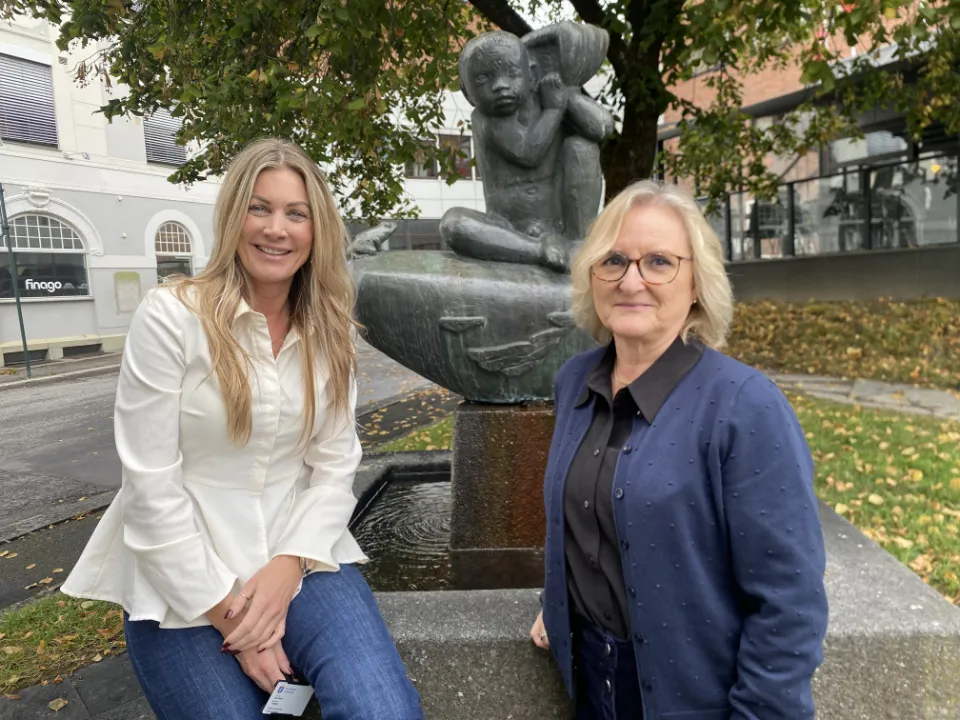
Competence mapping
“We carried out competence mapping where each employee indicated what they are already proficient in and what they need to learn more about,” says advisor Sissel Brenna Skogholt.
“We work purposefully with annual reviews of the health and care plan, and we believe we have a good overview of the competence-building measures we currently need. Moreover, we have action plans anchored in the Strategic Health and Care Plan and the Strategic Competence and Recruitment Plan.”
Relevant every single day
During our visit to the health and care sector, we meet Kathrine Barikmo Hefre, who is busy preparing the annual staff roster for the service supporting individuals with disabilities. A specialist educator, she has worked for the municipality for 19 years. For the past two years, she has served as a professional development coordinator with responsibility for areas such as competence development.
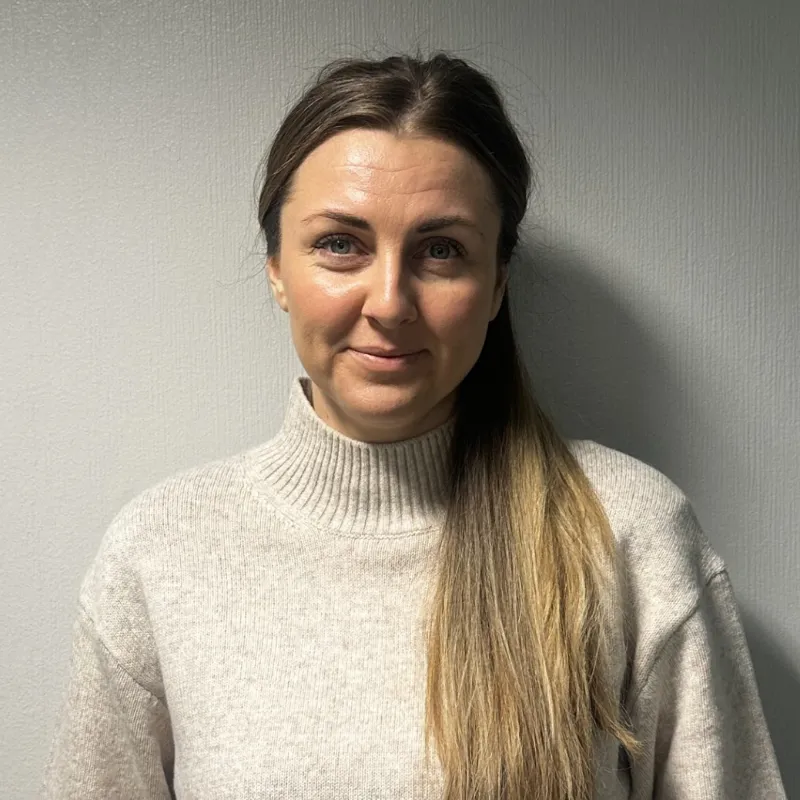
“Upskilling is relevant every single day. There are always new challenges in the workplace. Some of our service users live in their own homes, while others reside in institutions. This means we operate 24/7,” says Hefre.
Training programmes
“One of the greatest challenges in our service is competence. We have many staff members without formal professional qualifications. This isn’t necessarily a negative thing – they know their jobs well and possess a great deal of experience, but there is a need to further develop their competence. That is why we have developed training programmes tailored for staff in each of the residential care homes. In this process, I found the Guide for Good Health and Care Services for Persons with Disabilities (Veilederen for gode helse- og omsorgstjenester til personer med funksjonsnedsettelser) to be very useful here. The residential care homes differ and therefore their focus areas vary; for example, some may focus specifically on geriatrics.”
Support and reassurance through mentoring
The municipality offers a wide range of learning initiatives, catering both to new employees and to those who have been with the municipality for a long time.
“How do you support new employees – especially those who are also recent graduates?”
“We have an onboarding programme, and several organisations have also implemented a mentorship scheme. This is absolutely vital – recent graduates represent our future potential. New employees have to learn how to do the job, but they also need to learn how to be a colleague,” says Municipal Director Tangen.
The mentor is a nursing colleague whom new employees can turn to for advice and support. This provides new employees with support and a sense of security in their roles.
Dedicated work placement coordinator
The municipality also employs staff who are currently pursuing an education as healthcare workers, nurses and specialist educators. With a decentralised nursing education programme available in Notodden, it has become easier for those aspiring to be nurses to combine work and study. Actually, many people complete their work placements within the municipality, including first and second year upper secondary school pupils, healthcare interns, participants in the Men in Health programme, as well as nursing students, education students, physiotherapy students and occupational therapy students. To ensure the best possible work placement experience, the municipality has a dedicated work placement coordinator who manages all work placement positions.
Combining work and education
“We have good arrangements for nursing and specialist education students with the opportunity to combine work and study. Through tailored agreements, they can gain relevant work experience while completing their education,” says professional development coordinator Hefre.
“Are employees given time during working hours to complete training courses?”
“Yes. If someone spends their free time completing a course, they receive time off in lieu for the hours spent,” explains Hefre. She also highlights the learning benefits gained from participating in inter-municipal or national networks.
Many paths to professional development
“We are involved in various regional and national professional networks, such as the Network for Intellectual Disabilities and Sexuality. I have also completed further education in this area. We’re also part of a network for milieu therapists, which organises valuable professional events,” says Hefre.
Notodden Municipality invests significant resources in education, training and competence development. In addition to its own budget, the municipality applies for state funding through the Office of the County Governor. The health and care sector is involved in several development projects, including the Nordic Learning Circle Project, the Work Placement Coordinator Project and the Children, Youth and Family Support initiative. In the latter project, the health and care sector works in close collaboration with the education and youth services sector.
Uses internal expertise for staff training
Many internal courses are organised, led by professional development specialists, the municipal chief medical officer, advanced clinical nurses (ACN) as well as others. Online courses via KS-læring (a municipal training platform) are also used. Some staff also complete external courses, while others participate in inter-municipal network events. The municipality also uses My Life’s ABC (Mitt livs ABC) – a resource developed by the organisation Ageing and Health for both individual self-study and group sessions in the workplace.
Palliative care and dying at home
“Learning circles provide an excellent arena for meeting across different organisations, allowing us to learn from each other. Participating in this project has been a learning process for me too,” says Hefre. In Notodden, the learning circle consists of 6–8 participants from various health and care organisations. Three meetings have been held so far, with two more planned before Christmas.
“Our approach is to be curious about each other and seek collaboration. Our first meeting focused on palliative care and dying at home – something participants wanted support and guidance on. We reflected on the ethics involved – the discussion turned out to be so important that we continued it at the next meeting. My role is to provide an overarching perspective and listen to participants’ input. The issues addressed have to come from them, not from me; then together, we work out how to move forward,” explains Hefre.
The topic for the next meeting is the responsibility employees have towards their colleagues. Hefre acknowledges that this is a challenging subject. The group will use a case study concerning hygiene as a starting point for their discussion within the learning circle.
Mistakes happen – we can learn from them
How do you handle mistakes and mishaps at work?
“We are human and we work with humans, so mistakes are bound to happen. What matters is that we learn from these mistakes – both the person who made the mistake and their colleagues. We have a very open approach to mistakes and incidents. These are logged in a dedicated reporting system, then discussed and used as learning opportunities – provided, of course, that they are not serious incidents,” concludes Municipal Director Une Marit Tangen.
Empirical studies on the long-term impact of workplace learning is needed
Notodden Municipality makes use of available research and various education and training resources wherever they can be found. So, a natural question is which topics related to workplace learning require further research?
Ulrik Brandi believes a significant lack of empirical studies on the actual impact that different types of workplace learning interventions have on employees and organisations. This is particularly true for longitudinal studies, which track effects over time, as well as studies on initiatives that support informal learning in the workplace.