
What does an inclusive library look like in practice? It can mean that the library offers easy-to-read books, sign-language tours and staff who know how to adapt services to different needs. For five libraries in Lithuania, Latvia and Finland, the answer began with learning from one another.
Through the one-year Nordplus Adult project Bridging and Empowering Libraries for Inclusion, library professionals visited one another, observed services in practice and exchanged methods for making information, educational activities and library services more accessible. The project also aimed to strengthen staff competences and build a professional network for sharing knowledge about inclusion.
– Inclusion starts with communication: how we prepare information for our communities, what kind of design we use and what formats we can offer, says Greta Bacevičiūtė, the project’s main coordinator and chief project manager at Vilnius County Public Library.
Project Bridging and Empowering Libraries for Inclusion
Programme: Nordplus Adult
Duration: One year
Countries: Lithuania, Latvia and Finland
Partners: Five library institutions, including Vilnius County Public Library, Turku City Library, the National Library of Latvia, the Latvian Library for the Blind and the Lithuanian Audiosensory Library.
Focus: Inclusive library services, staff competences and adaptation to diverse needs.
Activities: Mobility visits, workshops, observation of services, meetings with professionals and exchange of practical experience.
For more information, contact: Greta Bacevičiūtė, Vilnius County Public Library, greta.baceviciute@amb.lt or Zane Zvaigzne, National library of Latvia, zane.zvaigzne@lnb.lv
Accessible services take many forms
Accessible library services can include Braille and audiobooks, easy-to-read materials and guided tours in sign language. But inclusion also concerns how educational activities are organised and how people experience the library as a place to learn and participate.
For Zane Zvaigzne from the National Library of Latvia, this social role of libraries is particularly important.
– People consider libraries safe places and trust librarians as educators and mentors. They are excellent places where people of different ages, interests and backgrounds can meet, says Zane Zvaigzne.
The National Library of Latvia has been working in recent years to become more welcoming to a wider range of users, including children, young people, seniors and people with different functional needs. For Zane and her colleagues, the project offered a chance to see how other libraries approach the same challenge.
Different libraries bring different experiences
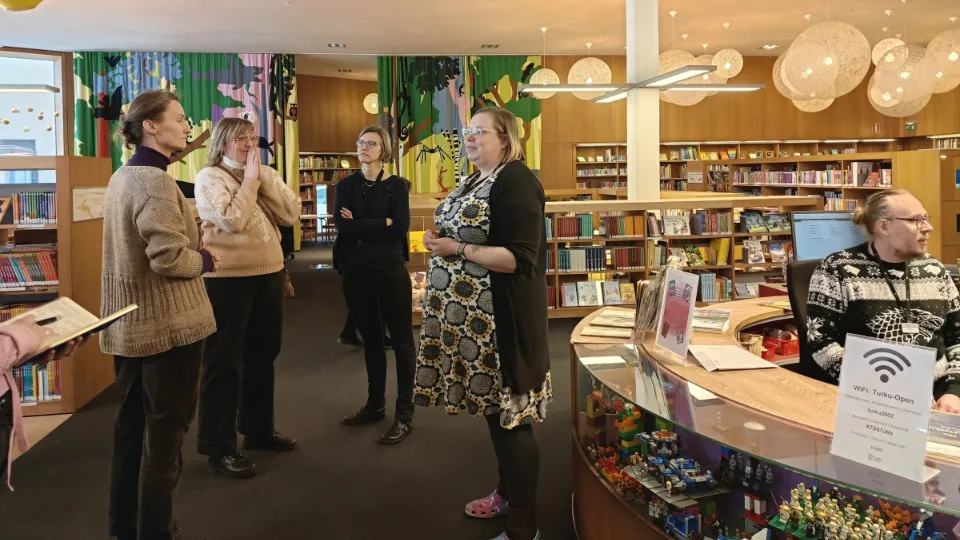
Mobility visits were at the heart of the project. Staff travelled to Finland, Latvia and Lithuania to observe services, discuss methods, meet local professionals and exchange practical experience.
The partnership deliberately brought together different types of libraries. Specialised libraries shared experience of working directly with people who have difficulty accessing standard printed text, while public libraries contributed approaches that can be used in broader educational and information activities.
The Lithuanian Audiosensory Library and the Latvian Library for the Blind contributed their specialist expertise during mobility visits in their respective countries and shared their experiences with partners during visits abroad. Their involvement gave public library staff an opportunity to learn from specialist institutions and exchange knowledge about meeting the needs of readers with disabilities, including people with dyslexia, visual impairments and difficulties accessing standard printed text.
That diversity was valuable to the Latvian team as well.
– National libraries differ from public libraries. We were very happy to have the opportunity to participate in the Nordplus project and learn from practical examples in other libraries, says Zane Zvaigzne.
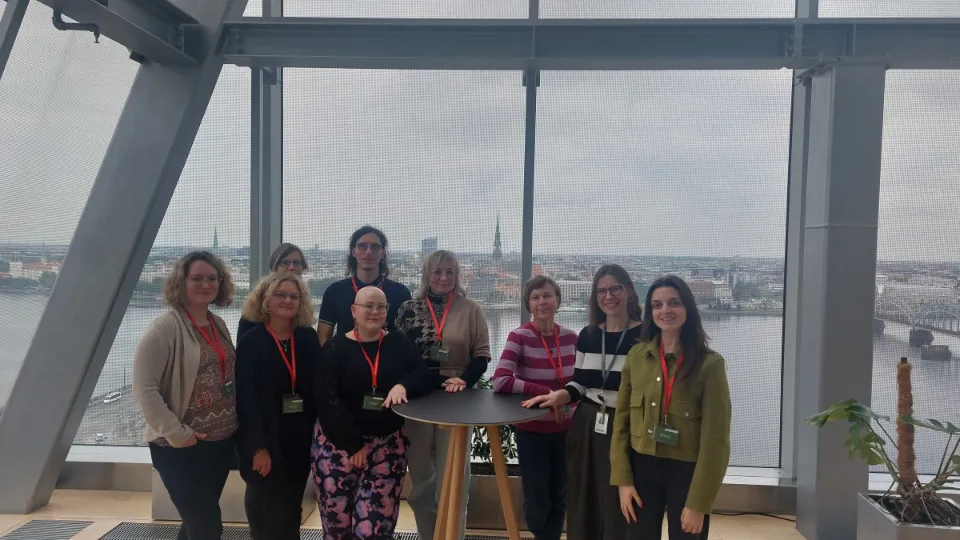
A story you can see, touch and taste
One of the ideas that Zane Zvaigzne brought home came from a visit to public libraries in Vilnius: sensory storytelling.
The participants were shown a fairy tale about bread in which the story was accompanied by objects such as grain, flour, a twig, sprouts and bread. Simple text was combined with objects and actions, allowing participants to experience the story through several senses.
– It involves sight, sound, smell, touch and even taste. We are planning to include elements of sensory storytelling in our educational activities, says Zane Zvaigzne.
The example illustrates one of the project’s central ideas: inclusion does not always require creating an entirely new service. Existing learning activities can often be adapted by changing the format or adding different ways of engaging with the content.
Vilnius County Adomas Mickevičius Public Library has worked for several years to involve people experiencing cultural, psychological, or social exclusion in its activities. Its initiatives include an audio guide for children with hearing impairments, training sessions and educational materials designed to develop different skills in children with autism spectrum disorder (ASD). The library also develops thematic educational programmes for children who experience reading difficulties and for families raising children with reading disabilities.
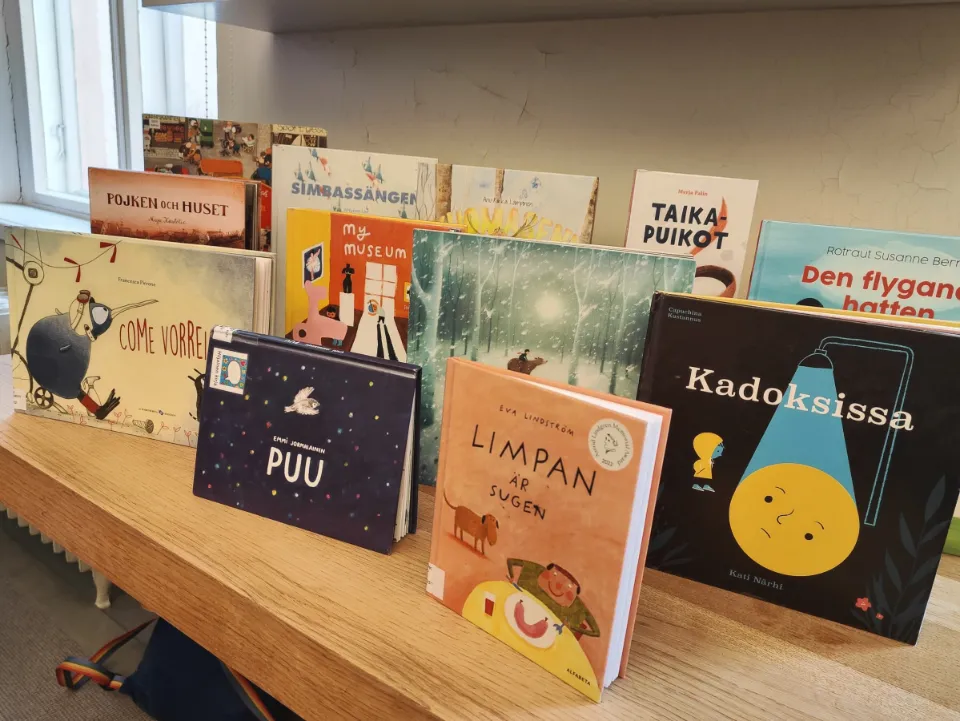
Silent books and easy-to-read language
Another format that attracted attention was the silent book, where pictures rather than written text carry the story. Vilnius County Public Library already uses such books, but the project inspired staff to give the format greater visibility and expand the collection.
Easy-to-read materials were another shared area of interest. The libraries exchanged experience on how to prepare texts and illustrations, communicate about easy-to-read formats and incorporate them into educational activities.
Vilnius County Adomas Mickevičius Public Library has also taken concrete steps to make literature more accessible. In 2023, it published Lithuania’s first collection of fiction for children in easy-to-understand language, Read Easily (level 3), followed by a collection of 15 fairy tales and folktales, Read Fairy Tales Easily (level 2).
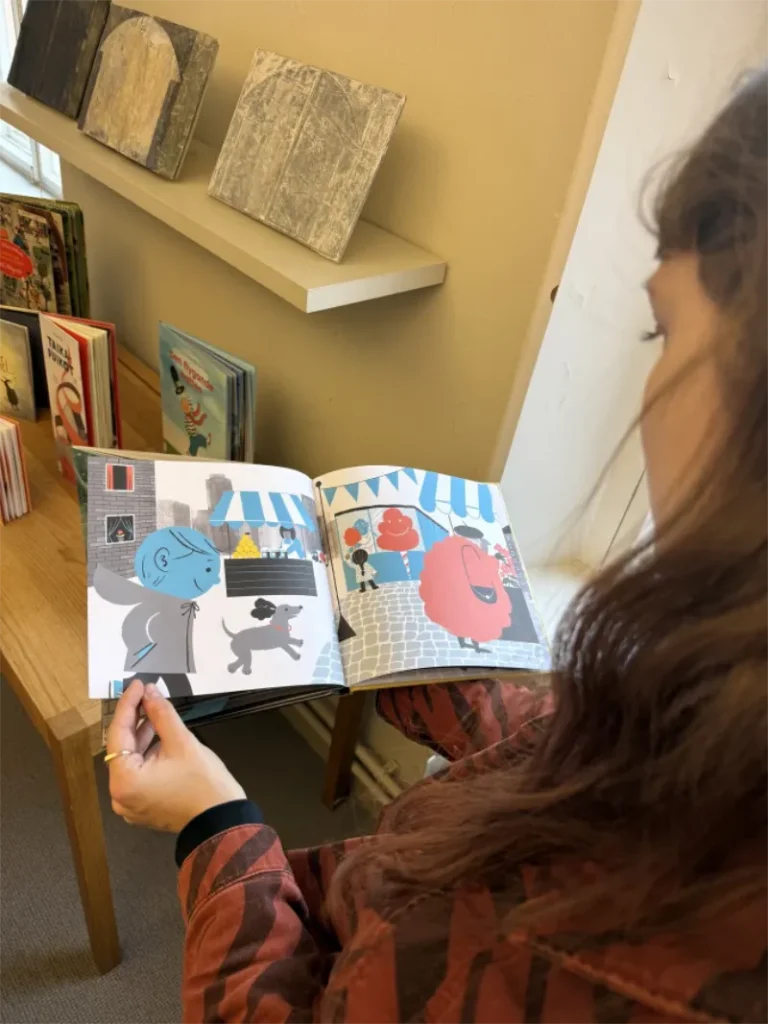
Greta Bacevičiūtė points out that easy-to-read material is useful beyond its role in supporting people with disabilities.
– There is sometimes an idea that easy-to-read is only for people with a particular disability. But it is a very universal format. It can also be useful for people who want to learn a new language or improve their communication skills, says Greta Bacevičiūtė.
Ideas that continue after the project
Some effects of the project will take time to become visible. Greta Bacevičiūtė expects the knowledge gained through the mobility visits to continue spreading through colleagues and regional library networks.
Greta also highlights the value of the partner network, which has developed into a community where participating institutions can share experiences, strengthen their knowledge and inspire new initiatives to improve services for vulnerable groups.
At the National Library of Latvia, the project has already produced something tangible: new professional contacts and concrete ideas to take into everyday practice.
– We highly appreciate the contacts we created during this project. We feel inspired by the different ideas we are going to implement in our everyday work, says Zane Zvaigzne.
