The Faroe Islands
General competencies opening doors for young people in the Faroe Islands
The Faroe Islands have created the Serbreyt programme to give those youngsters who struggle with the traditional requirements of upper secondary schooling the chance of an independent and fulfilling life. The programme supports students as they transition into working life and enhances social inclusion by focusing on general competencies.
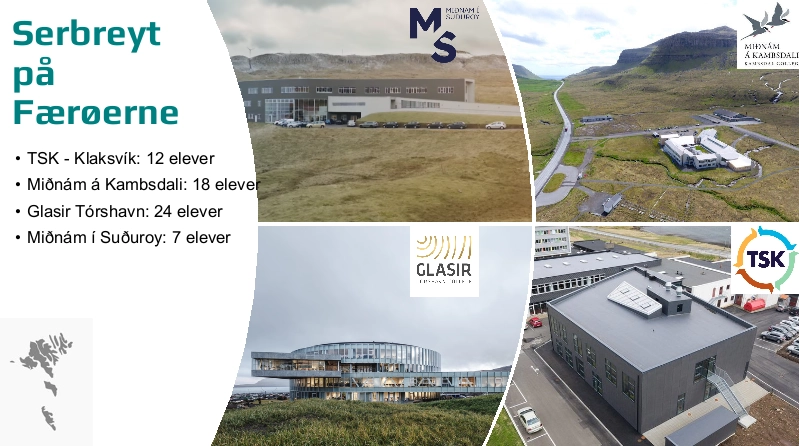
The Faroe Islands have launched an educational approach tailored to the individual that is designed to help youngsters who struggle to meet the academic and social requirements demanded of them in the standard upper secondary school setting. The Serbreyt programme is currently offered at four sites based at upper secondary schools and vocational schools with a range of specialisations and is directed at students over the age of 17. There are currently 65 students enrolled across the four schools and a total of 60 students have completed the full programme since its launch in 2015.
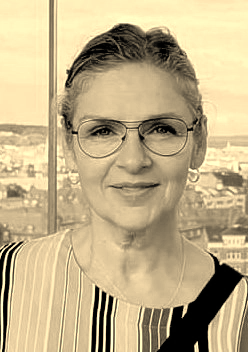
Maiken Skarðenni was the Serbreyt coordinator in Klaksvík when the programme launched and is now a careers advisor at the National Centre for Career Guidance and Student Counselling in the Faroe Islands (known in Faroese as Vegleiðingarstovan). She explains that the Serbreyt approach does not adhere to the use of learning goals found in the traditional upper secondary setting but instead adapts to the needs and developmental requirements of each individual.
“We don’t set a goal for them to learn specific things. Instead, we determine where they are at and how to build on that. The goal is to ensure that our youngsters go on to have a meaningful and independent life, insofar as that is possible. For many, that includes getting a job,” says Maiken Skarðenni.
Validation using OCN method strengthens students
To ensure that the formative validation of students’ progress is individualised, the instructors use the OCN method. This is a highly flexible tool which focuses on confirming students’ skills rather than highlighting shortcomings. The instructor selects suitable areas for development for the student from the method’s database and validates professional or general skills.
“We opted to use the OCN method because of the database and its considerable flexibility, as well as the fact that the skills feedback in the model is always positive in its nature,” says Maiken Skarðenni.
For students with a history of failure at school, positive feedback is crucial. For many parents, it is the first time they have seen their children’s strengths confirmed in such a clear way – this offers them relief and improves their understanding of their child’s future prospects.
“It is a very moving experience when a student is handed proof of their skills. Their parents are there, and they have this certificate that sets out that Johan is able to do this, that and the other. They read through it, and it dawns on them that this is the first time their child has been given positive proof of their skills,” says Maiken Skarðenni.
This process allows students to grow both as individuals and in their ability to participate actively in society.
”
We don’t set a goal for them to learn specific things. Instead, we determine where they are at and how to build on that. The goal is to ensure that our youngsters go on to have a meaningful and independent life, insofar as that is possible,” says Maiken Skarðenni.
General competencies are crucial to students’ development. The school validates, highlights and discusses them with the students to ensure that they know that “if you can do this in this context, that means you can also do it in that context”. This makes students more confident and allows them to tackle new situations.
Image from a presentation about Serbreyt. The figures apply to 2024–2025.
Students’ insights into general competencies help to drive continued development
Maiken tells us about one student she had who had significant social difficulties. The school had a week focused on gaming and it suddenly transpired that while the young man had trouble cooperating with his classmates, he was very good at online cooperation. He was online collaborating with four or five other people to solve a task in English.
“He was great at cooperating in the game but had never given it a moment’s thought because it was just gaming,” says Maiken Skarðenni.
Subsequently, both he and the school recognised his skills and that led to many changes. Later, during a work placement, he was able to cope well with the social interaction element of his work.
Understanding that general competencies are transferable is the key to continued development both when students are in work placements and in wider society.
Work placements often lead to jobs
All students enrolled in the Serbreyt programme are sent on a work placement with support from their school, and these placements often lead to a permanent job. These experiences are positive not only for the students but also for the point of contact at the host workplace, who is given time to get to know the student with support from the school.
“It’s not uncommon for employers to say ‘let us know when he’s done because we’d like to offer him a permanent job’. A number of former students are now in permanent employment and firmly rooted in the labour market. Many of them have received tailor-made offers,” says Maiken Skarðenni.
However, even for those students who don’t find a job, they – along with their school and their parents – still learn a lot during their time on the Serbreyt programme. General skills always come in handy out in the wide world.
Links
Faroese Directorate of Education web page on Serbreyt.
https://undirvising.fo/serbreyt
https://undirvising.fo/serbreyt
Details about Serbreyt at the TSK technical college.
https://tsk.fo/programmes/programme/65
https://tsk.fo/programmes/programme/65