2. Investigation – background, focal points and approach
2.1. Scope and delimitation
It is important to emphasise that this investigation of MC in the Nordic perspective is not intended as a complete, exhaustive study, but rather is based on diversity of mapping findings, to uncover occurrence, proliferation, application, development and potentials in the form of categories, types and formats of smaller learning units that can be contained within the current EU definition of microcredentials.
Furthermore, the aim of the study is to present mapping examples and, from these, to describe exemplary cases, named Good Practice Cases by application of the study’s methodological focal points.
The expectation is thus to provide systematic insight into state-of-the-art for this type of learning formats, which might – sometimes, but not consistently – be called MCs in each of the Nordic countries, Greenland, the Faroe Islands and the Åland Islands. Furthermore, to assess whether, despite national differences, a particular Nordic perspective can be defined for the development, occurrence, uses and anchoring of MC with a labour market and employment aim.
2.2. Data processing and analytical approach
This description illustrates structure, elements and processes in the overall investigation of MC towards an insight into state-of-the-art of MC in the Nordic countries and self-governing regions.
In the data processing, several part-processes are linked to establish a coherent analysis model, suitable for examining the identified MCs regarding built-in coherent factors.
Hence, in the mapping, the national examples of MCs are identified and characterised based on individual themes and aspects. In the analysis, correlations between individual topics are examined to establish a view of the complexity in the development, supply and application of MC. This means that there is a movement from the initial mono-perspectives of the mapping to the analysis’ identification and assessment in the form of a multi-perspective.
This methodological movement, from individual/mono-perspectives to combined/multi-perspectives, provides the possibility of identifying factors and conditions, and determining the development of MCs, which can be characterised in terms of added value for the end-users.
It is an ongoing aim of the research process to examine specifically what makes it likely for end-users to achieve benefits in terms of MCs.
Hence, the aim is to establish insight into such determining factors so as to develop a set of Recommendations regarding the development and application of MC.
2.3. Structure and elements
The analytical model and approach, figure 1 illustrates this movement and aim with the following elements and part-processes:
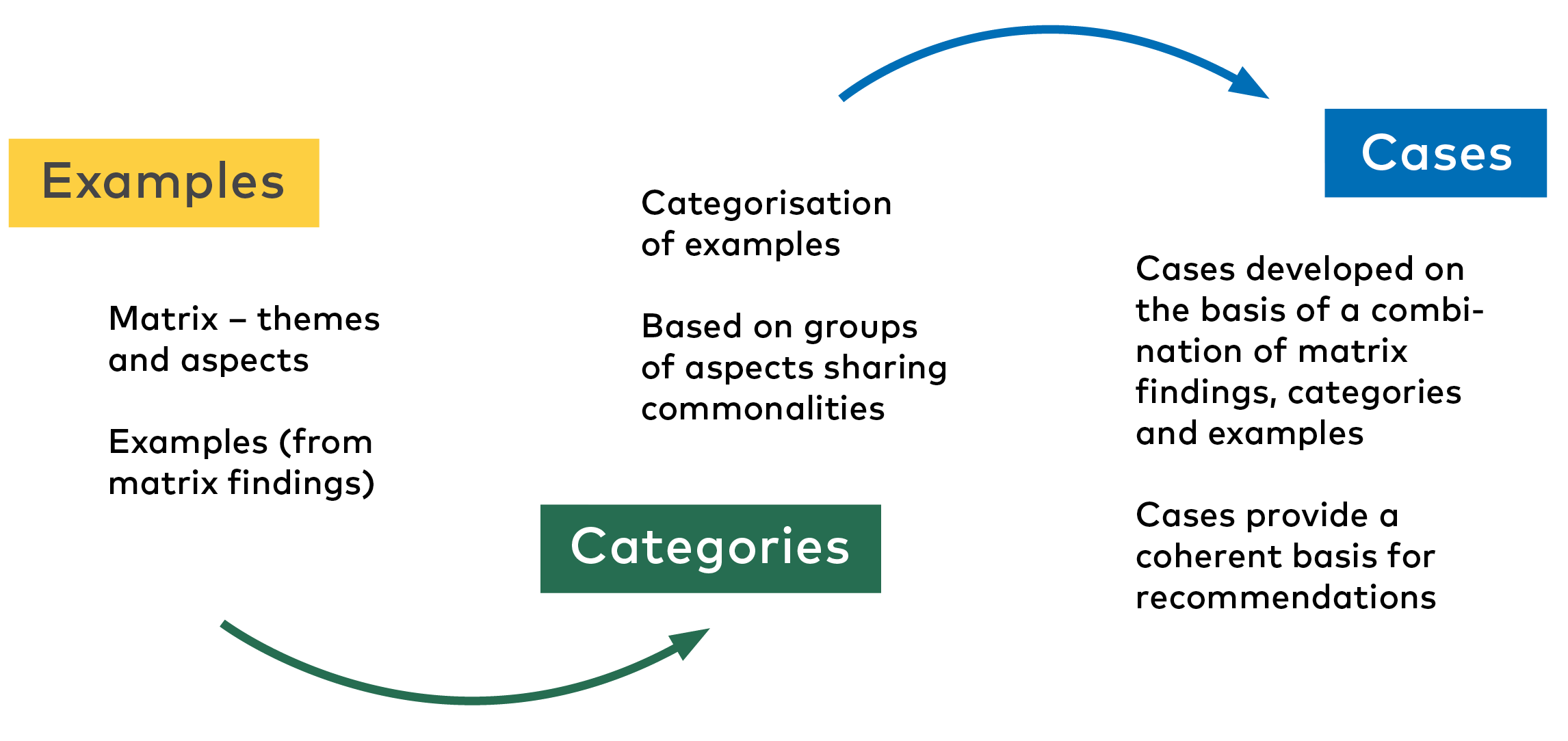
Figure 1. Model for data processing and analytical approach.
2.3.1. Examples
Based on mapping themes & aspects and findings, national examples are selected and presented.
2.3.2. Categories
Based on groups of aspects sharing commonalities, Categorisation of examples from the mapping findings are defined.
The definition of category, applied for the actual purpose – sorting and ordering data of micro-credential findings – is:
The aspects are identical to the thematic aspects of the matrix for mapping (presented below).
The categorising process enables an identification of patterns and connections to be further investigated in the analysis.
The categorisation process provides, as mentioned above, a movement from the initial mono-perspective of the collected, national mapping results – to the multi-perspective, applied in the overall analysis of identified MCs in a Nordic perspective. This perspective aims to enable an analysis of the complexity in development, provision and application of MC. In the analysis, this complexity is examined in terms of cases, which are developed based on mapping examples (reported in the matrix-answers).
Furthermore, an important scope of the analysis is to examine and assess if, how and why expected benefits for end-users are achieved – or not.
This scope also corresponds with the aim of examining the overall added value of MCs with a particular interest in examining the prerequisites for realising an added value and – hence to describe the character of an added value.
This scope and process for identifying a potential added value of MCs are also taken further into the process of Recommendation for the development of MC.
2.3.3. Cases
Cases are developed based on a combination of mapping findings, examples and categories. Together, the individual cases form core units for the analysis, as they also provide a coherent and firm basis for the Recommendations.
The NLL partners have selected one or more cases for description, based on a developed model. The model has been developed with a three-part structure, a WHAT section, a HOW section and a WHY section. The three-part structure provides case descriptions, applicable to explaining the content and mechanisms of the MC to ensure the intended results.
The cases provide a complex knowledge and understanding of development, provision, application and benefits of concrete MCs, while addressing the WHAT, HOW and WHY questions:
The WHAT section aims to provide an understanding of WHAT constitutes frameworks, conditions, context etc. for this specific MC – or in other words: to set the stage for the closer exploration of the MC.
The HOW section aims to provide an understanding of HOW the MC in terms of, for instance, content, aim, application and methods is developed.
Together, the two previous sections form the basis for a description of WHY the expected results of added value, benefits to end-users, are considered likely to be achieved by the user.
Thus, the cases demonstrate coherent perspectives and indicators, identified in terms of single perspectives and aspects from the mapping examples while also contributing to reflecting on the analysis of cases in coherent multi-perspectives.
The analysis of cases is carried out with the application of 1) models of coherent factors and 2) national context descriptions:
2.3.4. Models of Coherent Factors
Three models have been developed for the illustration of built-in coherent factors for the development, application and benefits of MCs.
The overall rationale for the models is: What determines the added value of MCs and benefits for end-users?
The primary focus of each model is:
- The Learner
- Legitimacy and Trust
- Transparency and Reference to Systems
The models, with these focal points, are applied in the analysis of cases to examine the impact of combined, coherent factors for the questions of added value and benefits for end-users.
2.3.5. National Context Descriptions
For each NLL partner country and self-governing region, an introduction to the national context for MCs is provided with a short description of what has or could have an impact on the opportunities for further development and proliferation of MCs. A particular element of the context descriptions are new formal initiatives.
National context descriptions thus provide a resource for the analysis of cases – as well as for the development of the recommendations.