3. The context phase: problem identification
During the context phase extended insight into the domain and domain-specific knowledge is created
The first step of a DBR research project is to develop a context analysis to describe and better understand the totality of challenges of which a given problem is a part. This phase is called the context phase and often implies some form of preliminary and investigative work. However, it is also a phase to return to when new learning and insight is created, requiring nuancing and further development of the problems related to the research questions. The main aim of the phase is thus to create extended insight into the domain, and domain-specific knowledge, which, in the present project, embodies knowledge about the practice of digital transition in SMEs, relevant additional challenges, information on adult learning, lifelong learning, and digital skills development.
3.1. Methods we use in the context phase
Desk study – “studying at one´s desk”
As a part of the preliminary work on the empirical investigation into companies´ digital transition, a desk study has been conducted to create domain-specific knowledge and fine-tune the problem identification. During the desk study selected policy documents and examples of national initiatives on the support of SMEs in the Nordic countries are collected, evaluated, and presented. This work has resulted in a working paper that offers insight into recent trends on working life and digitalisation as well as policy development in the Nordic countries between 2012 and 2022, contributing to the generation of knowledge on common features and differences between the respective countries. This work further outlines some of the shared Nordic challenges in the digital transition of the working life.
In this report policy documents are defined as the most central and relevant documents that describe national policies – which often are the result of political negotiations. Examples include national strategies on adult learning and participation in the working life, labour market policies that outline political recommendations, initiatives and regulations, policies and programmes on digitalisation, future needs in the working life, etc.
The desk study primarily builds on literature, policy documents, and examples of good practice provided by the network NVL Digital – Working Life and the reference group, as well as searches made by the research team based on this input. Based on these recommendations we use a snowballing method (Greenhalgh & Peacock, 2005) to circle additional central policies, initiatives, and literature via references and other information in the texts. The policy documents and examples of practice initiatives discussed in our desk study are selected based on 1) policy: the most relevant policies related to the research project´s focus on the working life, 2) examples of practice initiatives: relevance related to the project´s limitations (SMEs), and 3) variation on examples.
Field work: observation and informal chats
In the project the research team has conducted fieldwork inspired by ethnographic methods (Ybema et al., 2009; Marcus, 1995). This means that we have visited companies and made observations of daily “digital interactions”. The observations have been managed and organised by a middle manager/manager, whose function is to be the introductory contact to the enterprise. During all company visits this person has accompanied the researchers, introduced them to the main production processes, history, digital investments, opportunities, and challenges linked to digital transition as seen from the middle manager/manager perspective. This method has provided a space for several informal chats between researchers and middle managers/managers on the practices observed, puzzlements, and other issues that seem important in the field.
The middle managers/managers have introduced the researchers to several employees who daily experience the use of digital technologies. During these meetings informal chats also take place between researchers and employees, at their usual workstations, about the daily work, types of work tasks, changes, opportunities, and challenges. Some of these employees have been warned about the visit. Other meetings during the visits arose spontaneously. The informal chats have been characterised by an unstructured and explorative form.
During the field work the researchers obtained permission from the enterprises to photograph machines, products, and interactions between machines and employees – however, employees and enterprises appear as fully anonymous. The structure of the observations has been explorative and intuitive (Lofland & Lofland, 1995), and the researchers have therefore kept an open mind about how company digitalisation unfolds. However, specific attention has been given to exploring the technology framework. This means that the researchers have made a notice of the circumstances of which these technologies are a part, and how they are embedded. This could be circumstances related to architecture, temperature, ways of cooperation, colours, smells, concrete work tasks and other relevant features.
One company was visited by two researchers, and the other two companies by a single researcher. Both researchers have made observation notes following the visits, and these notes and photos taken at the enterprises have become part of the data used in the further analysis.
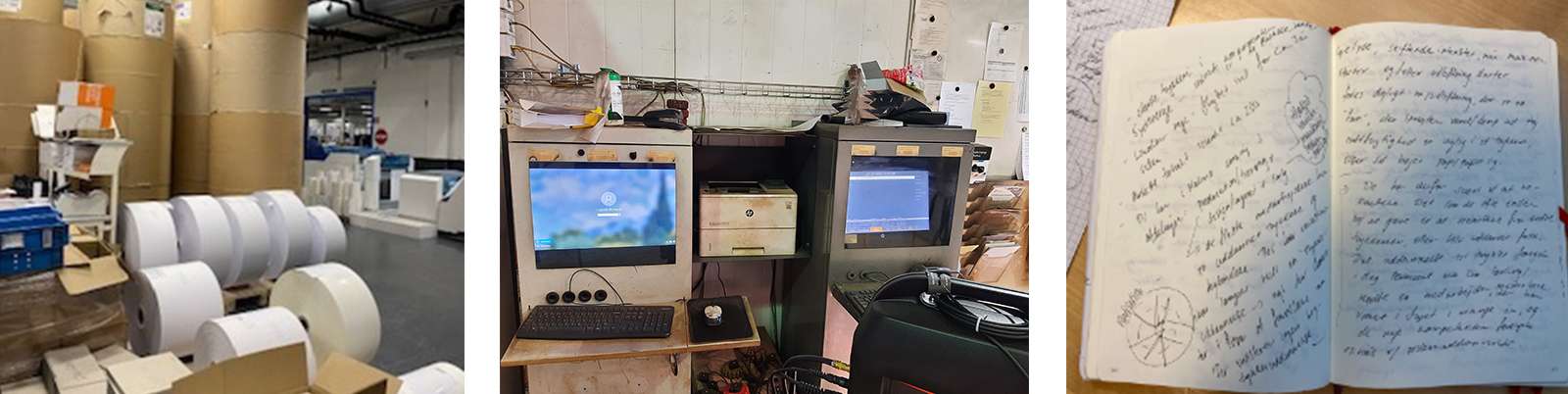
Figure 2 Examples of data: observation notes and photos from the field
Virtual interviews
During the context phase of the research project two in-depth virtual interviews were conducted with employees and middle managers/managers. Both interviews are semi-structured (Ybema et al., 2009) and as such the researchers have formulated some defined themes that they want to discuss with the interviewees, but the interviews have also developed in an intuitive manner and been shaped by the interviewees´ experiences and perspectives on digital transition.
The two interviews that were conducted during the context phase are of about one hour´s duration. Two researchers participate in these interviews, one of whom acts as the interviewer while the other adopts the role of observer and note-taker. In both interviews the two interviewees are present at the same time. The interviews thus share traits with focus group interviews (Halkier, 2010), where themes and questions are formulated to induce shared reflections and knowledge development, and where there is an opportunity to comment on each other´s understanding of reality as well as experiences. The interview layout also ensures that the interviewees are from the same Nordic country, an aspect that may contribute to a discussion on national experiences and similarities, patterns, and differences. The interviews are also designed to correspond to the participants´ role in the company: one of the interviews consisted of middle managers/managers and the second of skilled/unskilled employees. This organisation is selected for the interviewees to speak “openly” about opportunities and challenges related to digital transition.
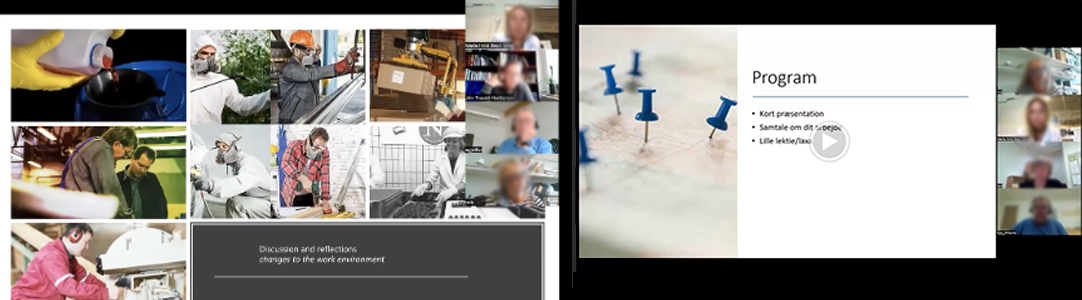
Figure 3 Examples of slides from an online interview
During the interview participants are presented with pictures that show scenes from the digital transition of a manufacturing plant. These are generic photos of work processes that are meant to produce memories of digital experiences from daily life and is thus a way to start the communication on daily work and daily work tasks, rather than producing “official” narratives on digital transition. The interviewees were also encouraged to take photographs of the various interactions they had with different technologies during a workday. These were sent to the researchers and became part of the total dataset. Examples of such data can be found in the “photos from the field” above.
Videos and the researchers´ observation notes work as data in the further analysis.
3.2. Digital transition of Nordic working life
As mentioned in the introduction to this report micro, small, and medium-sized enterprises make up 99% of all enterprises in the Nordic countries. Based on the EU´s definition (EU, 2003) it relates to enterprises with fewer than 249 employees, and three subgroups exist: 1) micro-enterprises with fewer than 10 employees, 2) small enterprises with between 10 and 49 employees, and 3) medium-sized enterprises with between 50 and 249 employees. In addition to the number of employees, the EU definition includes company turnover and assets. Although we share the view that turnover and degree of digitalisation are linked, this present project has limited itself to number of employees as the main criterion, since this is the most conventional way of classifying enterprises.
In the EU context the Nordic countries are often treated as one group, which is among the forerunners in digitalisation (e.g. EU, 2021; Alm et al., 2016; OECD, 2012), even if there is great variation between the five Nordic countries (Randall & Berlina, 2019). The ranking of the Nordic region is based on five indicators related to digital progression – indicators defined by the European Commission´s Digital Economy and Society Index (DESI) (EU, 2021): 1) connectivity, 2) digital skills, 3) use of internet, 4) integration of digital technology, and 5) public services. The Nordic countries top the scoring lists of these five indicators (cf. fig. 4). This means that the Nordic region has a strong position within digital development, according to DESI (2021) and other surveys. Recent research, however, finds that this position is uncertain when seen in a global perspective (Randall & Berlina, 2019; Alm et al., 2016), and if the Nordic countries would like to keep this position there is a need to strengthen and prioritise cooperation.
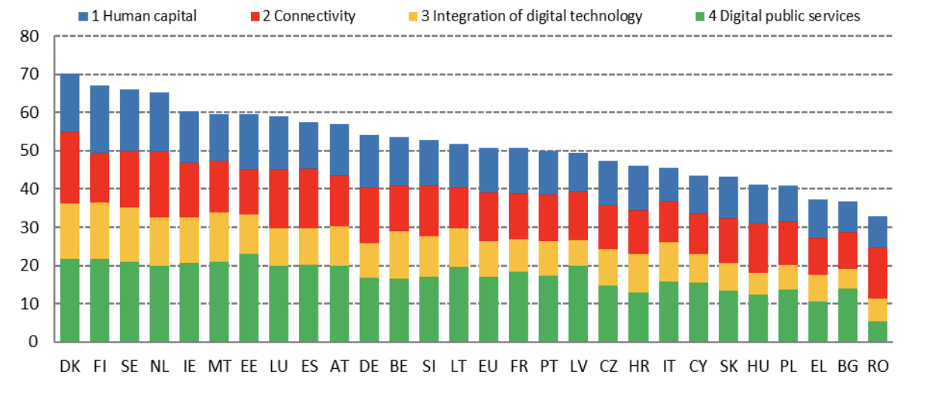
Figure 4 Digital Economy and Society Index, 2021
Despite this display of general societal digital strength, research on digital transition in enterprises (Alm et al., 2016) indicates that SMEs may struggle with the high speed of technological development, explaining why digital transition and the continuous upskilling of employees is slower in such enterprises compared to larger ones (Fredriksson, 2012). For instance, the large economic cost related to the removal of employees from the primary production to provide them with external training is one of the reasons for skills development not being a priority in SMEs. Consequently, the share of companies with IT specialist staff is lower among SMEs than among larger enterprises (Statistics Sweden, 2020). In addition, SMEs have fewer economic assets compared to larger enterprises, resulting in less investment in technological solutions. In short, SMEs in general have a lower level of digitalisation, which means that they are more vulnerable in the digital transition (Heilala et al., 2020; Iris Group, 2015).
This development possesses an inherent risk of a growing digital gap between SMEs and larger enterprises in the years to come.
A relatively large percentage of employees in the Nordic countries works in a company with less than 249 employees. In Denmark, Sweden, and Finland the percentage is about 48, 65, and 66, respectively, while the share in Norway is about 70% (Statistics Denmark, 2022; Statistics Finland, 2022, Statistics Norway, 2022, Statistics Sweden, 2022). Data from Iceland´s statistical office does not give a basis for similar calculations, except from providing an estimate of at least 62% (Statistics Iceland, 2021). There are reservations linked to all these percentages as the various countries´ statistical offices treat data slightly differently, and the numbers are thus not fully comparable
Description of various tables that form the basis of the calculations: Denmark: “General company statistics by region, time, company size (full-time employees) and unit”. Sweden: “Share of enterprises, employment, turnover and economic growth in the total non-financial economy, by size (based on employment) 2020, per cent”. Finland: “Enterprises by sector and size in number of employees by year, TOL 2008, size category by employee and information.” Norway: “Enterprise, turnover and employees except public sector, by employment group, statistical variable, year and region”. Iceland: “Number of enterprises and operational information by sector and size 2008-2019. Total company economy incl. fisheries and excl. finance and insurance sectors.”
The manufacturing industry as context
This report is focusing on the Nordic manufacturing industry – a sector facing extensive changes and new requirements (Berger & Frey, 2016; Kaplan, 2015; Pistono, 2015). Even if the technological development creates new (job)possibilities and general economic growth (McKinsey Global Institute, 2017; Sabbagh et al., 2013), we will also see job losses, specifically within the manufacturing industries (cf. fig. 5). This is true for all the Nordic countries, but even more so for countries where automation lags (see fig. 5). Compared to these countries the Nordic region and other even more advanced industrial countries like New Zealand, the USA, South Korea, and Canada are somewhat better situated, because according to the World Economic Forum (Martin et al., 2018) these regions demonstrate digital readiness on several parameters and are collectively far ahead in the digital transition.
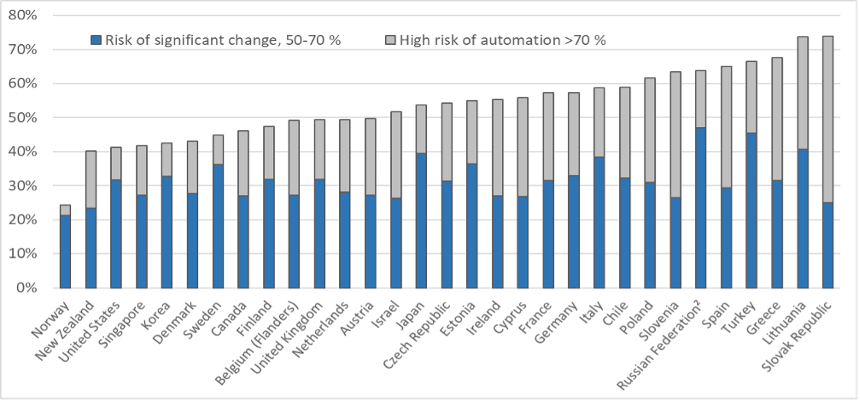
Figure 5 Variation in job automation (percentage of jobs at risk by degree of risk). Manufacturing sector. The table above is based on PIAAC data presented in Nedelkoska and Quintini (2018) and is a product of estimates made by the research team during the desk study.
As presented in figure 5, the risk of job loss is greater within the manufacturing industries in almost all industrialised countries compared to the total labour market. According to an OECD estimate (Nedelkoska & Quintini, 2018) the risk within this sector compared to the total labour market is about 10 percentage points higher in Denmark and Sweden, about 15 percentage points higher in Finland, while in Norway, which is an exception,
According to the OECD (Nedelkoska & Quintini, 2018) Norway is profoundly different in this grouping. Norway has the highest level of digitalisation and thus the lowest risk of job loss. This is first and foremost due to the petroleum industry being the country´s largest industry – an industry that for a long time has been based on automated processes, and where the opportunity for further automation is limited, compared to for instance the manufacturing sector.
Job opportunities and job loss following the digitalisation of the manufacturing sector
The concept of industry 4.0 (Liao et al., 2017) refers to the digital transformation that today and in the future changes and will change the general (working)life in organisations (Brynjolfsson & McAfee, 2014; Susskind & Susskind, 2015). Industry 4.0 is characterised by integrating the physical production with the digital world, making room for ideas on intelligent production and service networks being self-organised and self-steered across industrial chains, as for instance between transportation belts, order systems, and suppliers (Technological Institute, 2017).
In most workplaces digital technologies are introduced with promises of efficiency, simplification, and improvement. Within many sectors digitalisation offers the possibility to for instance develop new business models and related production processes, new forms of saving and sharing information/data, and new products and services. A central point in all these changes is the possibility of automation through digital technology, which for many enterprises imply the creation of new types of jobs, increased productivity, and lower costs.
These potentials are of course dependent on whether the enterprise in question has the necessary resources that investment in new digital technologies requires.
This transition may however pose challenges for employees, who may lose their jobs or see their work tasks radically changed, potentially requiring new sets of skills and new professional identities. Historically, employees who have lost their jobs to “the machines” have had the opportunity to move into another part of the labour market, but as recent research indicates, the post-industrial society no longer has any digitally-free zones (Ask & Søraa, 2021). An opportunity for continuous upskilling is therefore essential for employees to ensure that they stay employed and can deal with changes in tomorrow´s working life.
Across the Nordic countries there is a strong focus on the digital transformation and its influence on the labour market. Within the economic growth discourse the transformation is seen as a “required change” (e.g. DK, 2022). The main idea is to secure future labour markets under a disruption logic, i.e. a disturbance of the ruling system that is articulated either within the discussion on job loss (Autor, 2015; Berger & Frey, 2016; Ford, 2015) due to automation and robotisation, or as job growth potential due to new functions/innovation linked to digitalisation (Alm et al., 2016; Degryse, 2016; Sabbagh et al., 2013). These two digitalisation conceptualisations are often referred to as technology-pessimistic and technology-optimistic perspectives, respectively. The present report follows Plesner and Husted (2019) and Wajcman (2017) in holding a distance to these two conceptualisations as opposite poles. Instead, digitalisation is viewed as an indefinite and open process that is embedded and entangled in for instance concrete organisational practices, power dynamics, management systems, and other competences and skills in the organisation (Orlikowski, 2007; Plesner & Husted, 2019).
Consequently, this report is based on a non-technology-deterministic and organisational perspective on digitalisation, creating the possibility of revealing some of the “surrounding” factors influencing the transition, when new technologies are introduced into an organisation and thus reorganise the working life. This perspective creates a framework for better understanding the effects of digitalisation, and thus which opportunities this learning offers to support enterprises in their work on this process. This framework discusses questions like why and how digitalisation is applied, which actors are involved in this work,
This includes both human and non-human actors. This concept pair is unfolded in the part: Research findings – a picture of the working life drawn from empirical themes and theory.
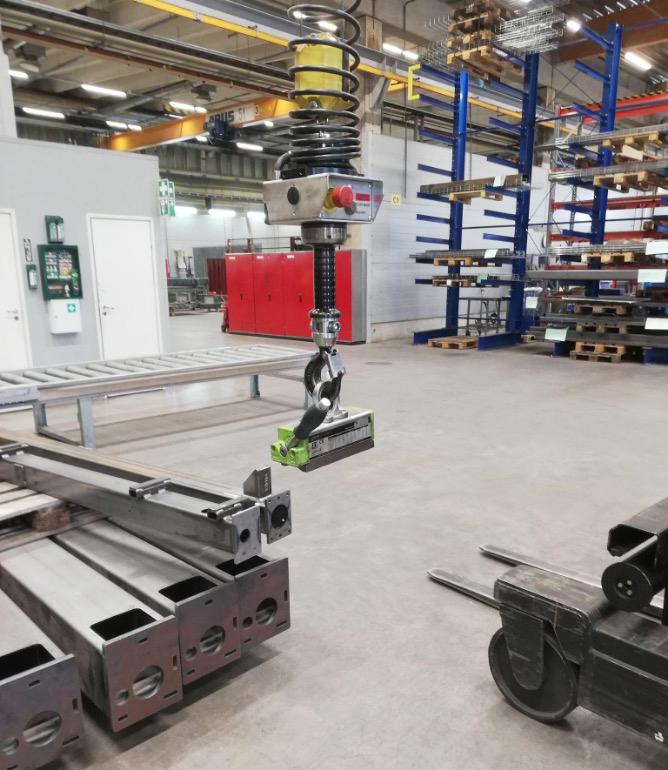
Figure 6 Example of automation
The robots are coming
As outlined in the section above, there is evidence for a change in and reorganisation of the future working life due to digitalisation. Research literature on the influence of digitalisation on organisational life (e.g. Beyes et al., 2022) has for a long time discussed the “disruptive potential” of digitalisation, and how this change may be accessed and understood. Plesner and Husted (2019) highlight the twin concept of blended (Fleming, 2019) and bounded automation (Beunza & Millo, 2015), that provides a lens through which we may observe the contextual and organisational circumstances and factors embedding technologies, and which influences the way digitalisation locally unfolds. This has inspired us to use the same lens in this report to achieve insight into the dynamics of interaction that condition the nuances and complexity of organisational transformation. Furthermore, the two concepts make it possible to assess some of the effects of digitalisation and use this to support enterprises´ level of digitalisation and employees´ opportunities for labour market participation.
The concept bounded automation addresses the organisational factors of automation and digital transition. Within this concept, digital transition challenges are not necessarily linked to the technologies per se, but rather to the organisational circumstances steering how these technologies are applied. As such, digital technologies are not seen as having an inherent potential to create positive change, innovation, growth, etc., but as being limited by various socio-organisational factors that decide how and why a job or a task is automated (Fleming, 2019, p. 24). These factors cover for instance the price of labour, organisational practices, power dynamics, the work task itself, and so forth. In the present report the concept helps facilitating a shift in focus and thus a new analytical correctness: from an exclusive focus on digital technologies to observing the organisational factors that condition the technological progress (or transition).
The concept blended automation is linked to a special variant of organisational design, where most of the work is automated but humans intervene and “monitor” the machines or complement the work of the machines in case of an emergency (break-down), when adjustments are necessary, or in situations where there is a need for human judgement. As an example, Beunza and Millo (2015, p. 37) highlight the need to contemplate how humans and machines interact and are entangled – where automation cannot stand alone but needs people to analyse complex challenges, understand irony, ambiguity, and so forth (e.g. the teamwork between the autopilot and the pilot in an airplane).
In the present report the concept helps facilitating an analytical correctness towards the special form of organisation that happens between humans and machines when they are “blended” or entangled.
Collectively the two concepts bounded and blended provide the analytical movement in the research project that is the basis for the recommendations and learning in the report, since one of them points to the circumstances in which digital transition happens, while the other highlights the reciprocity between technology and humans in the unfolding of the same digital transition. They also shape the structure of the description of the research project findings (below) and describe the bounded and blended circumstances that the analysis has generated, which will influence the interaction between humans and machines in the work of employees and managers on digital transition and digital work processes.
3.3. Digital transition on the political agenda in the Nordic region
As mentioned above, the present report aims to support the strengthening of Nordic cooperation on digital inclusion related to the digital transition by submitting recommendations for a shared Nordic policy development. In addition to the empirical investigation of the digital transition of the working life, this entails, as part of the desk study, a mapping of relevant policy initiatives on national and strategic work on the digital transition of the labour market in the five countries.
The impact of digitalisation on the working life is reflected on policy level in all Nordic countries. This can for instance be observed in the way the countries have formulated and developed digital agendas, work plans and strategies aiming to maintain the strong position of the Nordic countries on digitalisation in a working life context. These initiatives are linked to laws and regulations steering the working life and the life of businesses in a digital age, but the initiatives also include the employees and their opportunities for skills development.
Despite similarities between the countries, they are also different on several parameters. Among these are specific national attention areas (e.g. cyber security or digital exclusion), links to other policy areas (e.g. the climate or innovation), or economic priorities on how to support digital transformation (e.g. initiatives deleting unnecessary bureaucracy for businesses, or efforts on further and continuing training).
An overview of relevant policies on the digital transition of the labour market in Sweden, Iceland, Finland, Norway, and Denmark is presented below. This is not an exhaustive overview, but rather a review of some of the themes and trends in relevant policy documents, which contribute to the shaping of the digital transition in the Nordic region.
Skills development
All the Nordic countries underline opportunities of employees for lifelong skills development as an important parameter for succeeding with digital development. This entails, for instance, that financial support is available for further and continuing training to strengthen the basic skills of employees. In most Nordic countries this support is linked to a view on lifelong learning (DK, 2022; NO, 2019; FI, 2021; SE, 2021). The importance of financial support is shared by the Nordic countries, but the ways in which this priority manifests itself are different. For instance, differences in learning pathways to develop skills can be observed, from informal learning arenas/workplace learning (e.g. Norway: NO, 2017), via possibilities for e-learning (e.g. Denmark: UVM, 2017), to strengthened cross-sectoral cooperation (e.g. Finland: FI, 2019). The countries share an ambition to strengthen skills as a solution to the mismatch between the employees´ present skills and those skills that enterprises are expected to request today and in the future.
The green shift
In Sweden and Denmark, particularly, the agenda on digitalisation is connected to the green shift policy area (SE, 2017; DK, 2022). This means that these countries develop work plans that consider digitalisation a transversal phenomenon that is dependent on other policy areas like for instance the climate. Efforts and solutions are viewed as cross-dependent – and securing growth in a global competitive perspective is linked to finding new digital solutions to the green shift.
Innovation
Other links can be observed to the policy area innovation. In recent policies, Iceland (IS, 2021), Sweden (SE, 2017), and Denmark (DK, 2022) present the many opportunities digitalisation can bring to innovative designs, IT-solutions, and more. Innovation is seen as inherently linked to digitalisation and is formulated as an explicit competitive parameter in a strong digital society.
De-bureaucratisation and guidance
In addition to the aspects above, there are specific policy areas put forward by all the five countries. This includes for instance digital initiatives making it easier and more flexible for enterprises to do business. In Finland (FI, 2020b), Sweden (SE, 2017) and Denmark (DK, 2021) this ambition is called “de-bureaucratisation”. This entails a simplification of the interactions between enterprises and the government by for instance making it easier for enterprises to share various types of data, or only submit data to the government once.
Another articulation in the policy ambition to simplify the daily life of enterprises is related to guidance. This includes initiatives that aim to create accessible digital guidance for enterprises on digital transition, including guidance on economic support to further and continuing training of employees, or options for trying out robotic solutions in enterprises (FI, 2020a; NO, 2017).
Denmark has recently seen a new national strategy on digitalisation (DK, 2022), with an explicit focus on SMEs, which is also the present report´s specific focus. In this strategy an ambition to strengthen the opportunities of large as well as small enterprises in the digital transition is presented, since Denmark experiences competitive challenges (cf. above on Digital transition of Nordic working life). The strategy contains several initiatives on how new digital technologies may simplify the daily life of enterprises (e.g. de-bureaucratisation and digital guidance), primarily seen from the enterprises´ perspective.
The brief overview above on selected policies presents a Nordic region that despite national differences and variation in concepts has a strong focus on digitalisation. However, a shared Nordic policy development is still in the womb, specifically on workplace learning and education (Slåtto, 2020). As part of the Nordic Council of Ministers´ plans and work on digitalisation (NMR, 2020) the focus has primarily been on the development of digital skills, including digital literacy and citizenship, digital infrastructure, enterprise operations and national digital service delivery. As highlighted in the introduction of this report, there is a need for strengthening, from a pan-Nordic learning perspective, the shared efforts on digitalisation and the reorganisation of the working life that is the result of this digitalisation. As presented in this report there is an additional need for an increased focus on SMEs, since they constitute more than 99% of all enterprises in the Nordic region (cf. above on Digital transition of Nordic working life). This report aims to meet both these needs, via its data and recommendations.
3.4. Research findings – an image of the working life drawn from empirical themes and theory
In the research project we focus on investigating and better understanding the ways digital transition unfolds and reorganises the working life. Partly, this originates from a thematic inspired analysis (Braun & Clarke, 2006) where we via shared and iterative analyses in the research team and supported by a hearing among the members of NVL Digital – Working Life have identified patterns and themes across the collected empirical material. The processing of empirical data has taken place in an interaction between the explorative (trying to be open towards what the data “tells” us) and a processing based on theory. Concretely, analysis of the data is based on the previously mentioned theory on bounded (the organisational circumstances) and blended (the new organisation that is the result of humans and machines interacting) digitalisation perspectives (Beunza & Millio, 2015; Fleming, 2019). This means that through analyses we have followed (mapped) what happens and what is related to the interaction between humans and machines in employees´ and managers´ work on the digital transition and digital work processes.
By giving attention to the relation between humans and machines – from now on called human and non-human actors – the research project rests on the theory of sociomateriality (Orlikowski, 2007), where both human and non-human actors have the power of action when they interact and entangle. They project a specific course of action for ways to conduct the work, and as such they also take part in the reorganising of the work. Within this theory not only humans and non-humans possess the power of action, but the power is rather viewed as being created during the interaction between a variety of actors that take part in the specific situation. The employee is of course in charge of the technology, but other facets like the interior design, room temperature, moods, smells, “dirt”, emotions as in feeling shame, inadequacy, or success, narratives, specific circumstances, etc., also possess power of action. In short, in this research project we are concerning ourselves with this interaction and the resulting reorganisation and its effects, when investigating digital transition.
The thematic analysis, with the desk study and the domain-specific knowledge discussed above, contributes to the drawing of an image of working life, which also acts as an image of identified challenges. First and foremost, the image relates to working life under the digital transition phase and is thus drawn and defined by those people that daily experience this change. However, policies, literature and input from other relevant stakeholders contribute to the drawing. Taken together, the working life image exhibits some of the challenges that characterise digital transition in Nordic workplaces, and thus it also acts as an image of challenges. Consequently, the analysis contributes to the creation of a deeper understanding of how the digitalisation level of enterprises may be supported, and how employee participation may be increased.
In the presentation below on the research project´s findings, we use as a general structure the concept pair bounded and blended digitalisation circumstances. They both contain themes, identified by the analysis, that refer to specific organisational factors that condition the digitalisation (bounded), as well as specific forms of organisation that are produced in entanglements between humans, technology, and other actors in digital work processes (blended). Each theme has been given a headline that describes its main content. The themes have been unfolded via relevant theory as well as empirical examples. Even if our research argues that these themes are in play and contribute to the image of the working life under digital transition, it must be noted that all examples presented are just examples. Not all enterprises convey these themes, but they are examples of how specific themes have materialised during the present research.
3.4.1. Bounded digitalisation circumstances – organisational factors
Bounded digitalisation circumstances describe, as discussed above, the specific organisational factors that condition digitalisation. In the present project these factors are linked to three themes (analytical findings) related to various organisational dimensions, which can be seen as circumstances that respectively inhibit and promote digitalisation. As such they may point to potential delays or accelerations in the transition. This may for instance relate to communication processes that are muddled or flexible, or the architecture/interior design that supports or discourages new processes. The themes are presented below in a random order.
Narratives on digital transformation
Perceptions on the consequences of digital transition are made visible through workplace stories on digital shifts. This could for instance be ideas on whether digital transformation brings with it new and exciting opportunities, whether it is scary or unavoidable, or whether it changes the work tasks of employees and managers to the better. These ideas exist in organisations and are brought to life through stories or narratives on transformation, which employees and managers use to create meaning (Taylor et al., 2002). They do this to better understand and interpret past, current, and expected actions and experiences (Boje, 1991). This perspective on narratives focuses on the creation of meaning, and not on whether the stories are “true” or relate to an objective reality. Furthermore, it is a perspective that understands narratives as co-creators of organisations. They are powerful, as some narratives may be allowed to dominate, while others are marginalised, and as such they may influence and condition how for instance digital transition is practised, understood, or experienced. Narratives can act as strong drivers that may support or discourage a local transition or change in an enterprise (Buchanan & Dawson, 2007).
IN BRIEF:
Narratives on digital transformation: The enterprises surveyed are different in how they discuss digital transformation. In the research team we treat this information as narratives that are formulated as either prejudices or attitudes. These narratives do not express a specific truth but are rather ideas that circulate among employees and managers, influencing how changes are made. Narratives may support as well as delay digital transition.
With this focus on narratives, we aim our attention at an analytical finding that points out some of the ideas present among employees and managers, related to digital transition. These are, as already mentioned, ideas based on past and earlier work experiences, as well as current experiences and expectations of the future.
In the present research we see that these narratives contribute to a reorganisation of the work under the digital transition. This is made possible through a production (and reproduction) of specific ideas on the transition and the actors related to it, resulting in some work processes, structures, skills, priorities, etc., being supported, which may speed up (that is, support) or create delays (that is, complicate) the transition. If a narrative on older employees being “technology-resistant” exists in a company, senior employees may feel less motivated to increase their skills, because they believe they are seen as such.
Narratives thus have power, since they influence an enterprise´s readiness for transition, employees´ relations with digital aspects, the cooperation between employees and managers, and the interaction between employees and machines. For an enterprise it may be interesting to obtain information on which local narratives are in play and investigate whether they contribute to delaying or supporting an organisational change (or both).
TRANSITION TIP
An enterprise may find it interesting to obtain information on which local narratives are in play and investigate whether they contribute to delaying or supporting an organisational change (or both).
An enterprise may find it interesting to obtain information on which local narratives are in play and investigate whether they contribute to delaying or supporting an organisational change (or both).
Two types of narratives that reorganise the work under the digital transition are presented below; they are concretely identified by empirical data.
Narratives expressing prejudices
One type of narratives that we have identified through our research is related to what we call prejudices. These narratives are mainly characterised as prejudices towards people involved in digital transition.
We have for instance uncovered in our data the existence of narratives that show prejudice towards employees who conduct work tasks related to digital technologies. These are narratives produced by the employees themselves, as well as middle managers and managers. In our data we can identify three versions of narratives that all relate to similar ideas about the employees who do not want to, or cannot, or are sceptical.
The first version is broadly related to employees “on the floor”. As such, this version comes from a hierarchical understanding of the type of employees that conduct operative work tasks (as opposed to a manager with strategic work tasks), and who do practical, manual work with the technologies. This narrative conveys, in general terms and imagery, technological resistance from employees on the floor.
The second version is related to some form of employee identity, as the narrative is linked to “blue-collar” employees. These are employees whose background is from specific education programmes and levels and is primarily an identity centred on manual work. In this version the employee identity is connected to a form of conservatism and fear of being monitored. That is, a fear of being monitored by technologies, and being exposed as lazy, defiant, incompetent, etc.
Finally, the third version of the narrative relates to the age perspective and defines some employees as “older employees” who lack professional skills and have difficulties with the introduction of anything new.
Taken together the three versions make up a narrative on employees in the digital transition that for various reasons (education, age, place in the hierarchy) are challenged by anything “new”.
In the digital transition the narrative becomes a part of the framework within which enterprises understand their employees, and the employees understand themselves. As such the narrative contributes to the production of “realities” since it, often implicitly, has a say in strategic decisions and priorities. For instance, enterprises may act on a narrative related to senior employees with non-adequate technological skills, resulting in a strong focus on how such employees can increase their skills, but a weak focus on other potentially fertile interaction arenas between humans and machines. It may, for instance, be beneficial to develop new forms of organisations focusing on the relation between traditional (manual) competences, which have been developed through years of tactile, emotional, and relational skills, and IT-specialised competences. It may also be beneficial to make use of skilled seniors in decision processes on digital upgrading related to purchasing and the physical reorganisation of manufacturing processes.
TRANSITION TIP
It may, for instance, be beneficial to develop new forms of organisations focusing on the relation between traditional (manual) competences, which have been developed through years of tactile, emotional, and relational skills, and IT-specialised competences. It may also be beneficial to make use of skilled seniors in decision processes on digital upgrading related to purchasing and the physical reorganisation of manufacturing processes.
It may, for instance, be beneficial to develop new forms of organisations focusing on the relation between traditional (manual) competences, which have been developed through years of tactile, emotional, and relational skills, and IT-specialised competences. It may also be beneficial to make use of skilled seniors in decision processes on digital upgrading related to purchasing and the physical reorganisation of manufacturing processes.
The research project perceives that narratives related to prejudices take part in the reorganisation of the work under the digital transition. They contribute to the production of reality perceptions through which employees, managers and enterprises act and understand each other and themselves.
Narratives on attitudes
Another type of narratives that have been identified in the empirical data are related to what we call attitudes. Narratives on attitudes are in this research project seen as different from prejudices. We understand prejudices as stereotypical assumptions on group level, and attitudes as personal perceptions or assessments of situations and contexts related to digital aspects.
In the project data we find that attitudes towards digital aspects are oriented along various time dimensions called temporalities (Wajcman, 2015). They diverge from conventional and linear understanding of time by not being related to time aspects that can be numbered in seconds, minutes, days, and years. On the contrary, attitudes are oriented towards flexible time aspects that are produced in the entanglements between humans and machines, which contribute to the structuring, guidance, and organisation of current work processes (Orlikowski & Yates, 2002).
Futures
One temporality is related to the future and the profits that digitalisation may bring. These are wins that can already be observed and experienced in the manufacturing sector, but that simultaneously are tied to the dirty work of the past (oil, grease, toxic fumes, heavy lifting, monotonous routines) as well as dreams about the future. It creates a form of time fusion (past-present-future), while being oriented towards something in the future. We conceptualise this temporality as “futures” in digitalisation, as it is related to various temporal (future) landscapes. These landscapes contain both worries and hopes, that as mentioned above could be connected to a “dirty” past, a changed present, and are considered related to ideas about a future. The landscapes are thus complex, and they contribute to reorganising the work conditions since they influence whether an organisational change is considered meaningful/meaningless, dark/full of light, or as a mixture of potentially opposite perceptions – and as such very complex.
As an example of this complexity our data shows how hopes of flexible and effective processes get entangled with worries on how one´s work skills will match the new demands that these dreams entail. We can also find that when hopes about a “cleaner” future free from heavy lifting and the oil, fumes and bad smells of old machines get entangled with worries about whether the machines will completely take over one´s job, the complexity influences whether employees feel they can accommodate these futures.
“All-times”
Another temporality revealed by the analysis is what we have called “all-times”. This a temporality that defines digitalisation as a basic term – a term that is so fundamental that it influences everything else. It conveys a temporal landscape that covers everything and is always present. This may be geography/locations, relations, work processes, products, clock time, hierarchies, professional identities, etc., and explains why the temporality is called all-times – it cannot be overlooked. This temporality implies an understanding of technologies as actionable entities that may create change, innovation, better processes, etc., everywhere and all the time, and as such expresses a form of technology determinism. The temporality is based on an a priori understanding of technologies as those circumstances or courses of power which always (all-times) create the best and most rapid results. One example we find in our data is the general optimism on behalf of technology that can be seen among managers and employees in the enterprises, and which is visible in the strategic priorities and related dreams about the future on competitiveness and product development. However, there is far less focus on some of all-times´ effects on the work environment and questions like: How will the new digital work processes influence cooperation or professional identities? Or recruitment: Are we able to recruit the competences we need? Or retention: How do we most successfully manage skills development within the new organisation?
In the present research project we understand the temporal landscapes “futures” and “all-times” as narratives that express attitudes on the concrete practices and potentials of digitalisation, and which contribute to the reorganisation of the work under the digital transition. They condition how the demands of digitalisation are met by employees and managers – and why “futures” and “all-times” may contribute to both limiting and supporting digitalisation.
Narratives on digital transformation: Voices from the field
“There is no doubt that younger people find it much easier to learn computers and so on, than older people do.”
“I think that if we say that the elderly cannot learn to use digital technology – then it quickly becomes a self-fulfilling prophecy, doesn´t it? It may well be that this is more difficult for the elderly, but then these difficulties can be reinforced by such stories about the elderly. However, these narratives arise automatically, whether you want it to or not.” (interview, December 2022, middle manager, SME).
Agencies of change – who has the power to act?
During digital transformation the technology itself is often the turning point. The focus of for instance policymakers, enterprises, managers, and employees is “the new” – that is, the technology to be implemented, and the technology that will innovate and change, create agility and effectiveness, etc.
As mentioned above, the research of this report is informed by a non-technology-deterministic perspective on the working life (Plesner & Husted, 2019; Wajcman, 2017). Consequently, digital technologies are not viewed as having inherent qualities that in themselves lead to change, innovation, streamlining, etc. Within this perspective, digital technologies do not have wilful power to act. The action and the potential innovation and change rather happen when technologies are entangled with concrete organisational practices, existing policy in the field, power dynamics, and work environments. This understanding is based on the above-mentioned theory on sociomateriality (Orlikowski, 2007).
A consequence of this theory is that the power to act does not “belong” to anyone. What is important in the various interactions and situations between humans and machines is not a given – it is the entanglement that happens between the technologies and other human and non-human actors in the surroundings that decides how digitalisation is unfolding. This perspective on the relation between people and machines implies that what is having agency, and thus the power to act, is a local matter and subject to change. A legitimate question to ask for any enterprise is: who or what has the power to act in this situation, and how does it influence how our organisational change is implemented and owned?
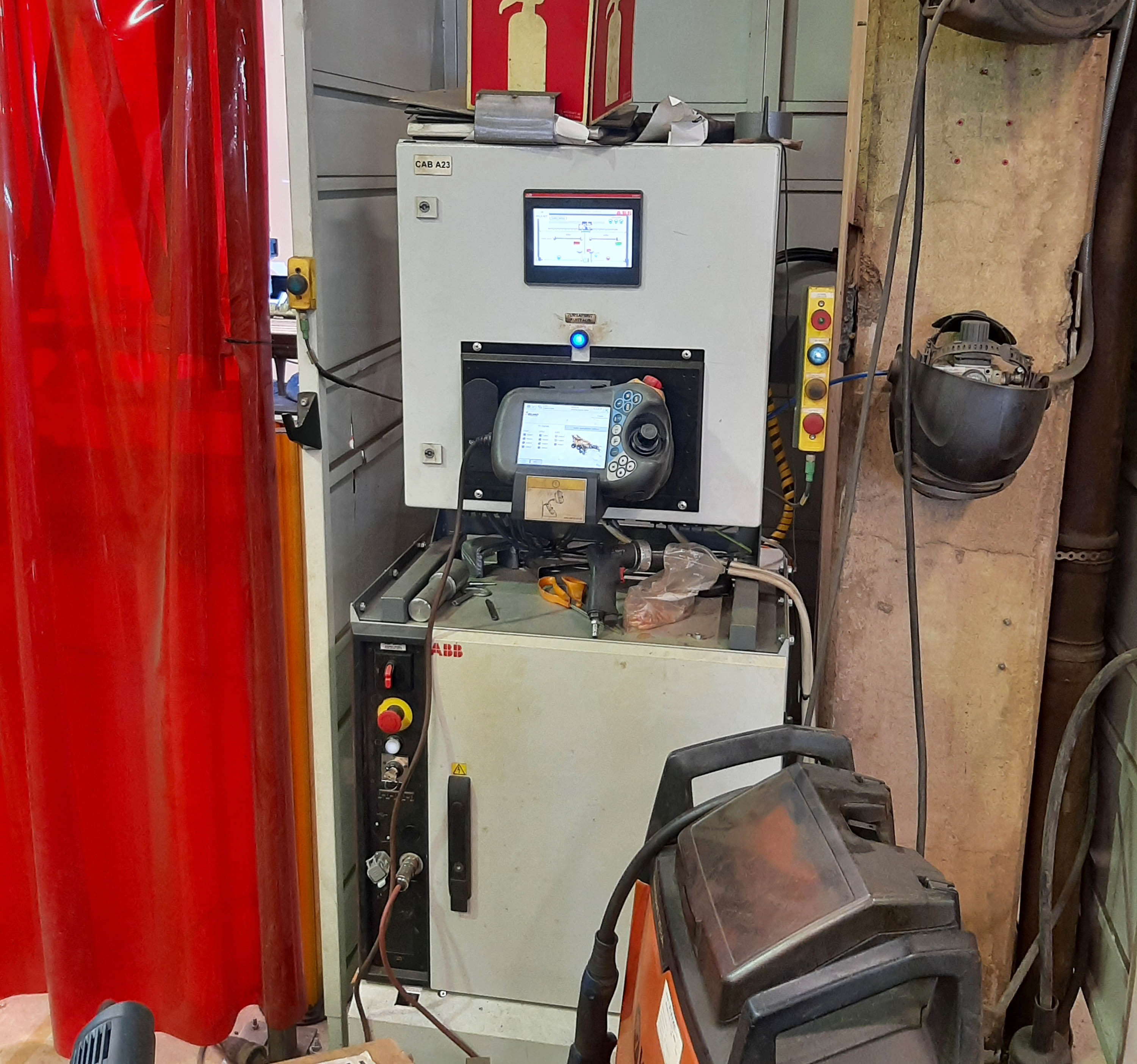
Figure 7 Example of non-human actors
IN BRIEF:
“Agency” is related to the many factors that influence the digital transition in a concrete situation. Some will say that the technologies are the agents of change, while others maintain that people are the agents of the digital shift and decide how employees do their tasks. Our investigation revealed that the transition is influenced by additional factors: e.g. 1) installed digital technologies supporting work at the assembly line create a limbo between two labour periods: “the control tower” in old manufacturing plants gets redundant. Or 2) assessment based on “tacit knowledge” on when a component is “correct” or a process is finalised, is necessary to monitor digital processes.
The agency of architecture
Our data identifies two agents that influence organisational change. One of these we call the agency of architecture. This agency becomes visible and obtains influence on the work design when new technologies “move into” older plants and buildings with traditional interiors. For instance, in our data we can observe an architecture and interior design that mirrors the work processes of old – a previous machine age – and that will “create noise” today since the architecture limits the way digitalisation may unfold and be practised. Matched with new technology, the old architecture gains the power to act, since work processes and other forms of work design are partly steered and accommodated by this architecture or interior design.
Examples of this aspect are the “control towers” or “glass cages” placed in the middle of the plant floor, which earlier functioned as places where middle managers could supervise the plant and follow the rhythm of the production, the employees´ productivity, etc. This kind of architecture may not serve any purpose today, as modern enterprises value mobility, self-management, and networking, and where manufacturing is supervised through the user interface in a digital artifact. The architecture is a type of remains within which the new machine age has developed. It may potentially create security by offering familiar interiors and practices during a gradual process into which “the new” is introduced. However, it may also offer an insecure atmosphere, since employees may have trouble identifying which logics and practices are the most legitimate. Is it the logic of digital systems related to mobility and self-management, or is it the middle manager in the “glass cage” that organises and steers work processes and progress?
By pointing to the agency of architecture as an aspect that during digitalisation reorganises and conditions the work, the present research underlines that there are effects to consider, whether the digital is developed within the architecture of an earlier machine age, or whether the digital is part of the development of an entirely new architecture.
The agency of senses
Another agent identified by our data is what we would call the agency of senses. This agency deals with the tactile senses of employees´ trained sensory apparatus that are set in motion in the meeting between machines and humans, and which challenge the precision of the machines. Examples include the sound of an element that is correctly placed in a constellation, or the sensation in the hand when touching a component that tightens or slides when it is being adjusted or screwed into for instance a machine spare part. The hand´s internalised tacit knowledge (Nonaka, 2008) on when a component is placed “correctly”, and with the correct angle, is a bodily sensation that is noticeable e.g. in the fingertips, developed through years of experience, and which influences the organisation of the interaction with technologies.
What our analysis has found, and what is materialised, is the agency of the senses in the interaction between humans and machines. What we can identify as being a part of the reorganisation of the interaction between people and machines, includes to a large degree employees´ tactile senses that are developed through year-long experience. These are senses that current technology cannot replace, but by which it is corrected. In this finding our research underlines that sensory knowledge is still relevant, and in interaction with digital technology this type of knowledge contributes to the reorganisation of work in a digital transition process.
TRANSITION TIP
In an enterprise it may be a good idea to be aware of how the interaction between humans, machines and architecture can contribute to supporting digitalisation.
In an enterprise it may be a good idea to be aware of how the interaction between humans, machines and architecture can contribute to supporting digitalisation.
In the present research project, we can observe the agencies of change as co-creators in the digital transition. This co-creation is important for the interaction processes between humans and machines. In this way, what has agency conditions how digital transition is executed locally. The agencies of change thus influence how digitalisation is supported or limited. In an enterprise it may be a good idea to be aware of how the interaction between humans, machines and architecture can contribute to supporting digitalisation. Our specific analytical findings on architecture and senses show how agencies of change can delay the transition, for instance if they create insecurity, and support digital transition, if different knowledges are prioritised when humans and machines interact.
Agencies of change – who has the power to act: Voices from the field
“When it comes to inspections and things that have to be done, there are a number of things that still have to be done manually. There is no digital system that can determine whether this is good enough in terms of quality when it comes to certain aspects.” (interview, December 2022, middle manager, collaborating SME).
Duplicities and ambiguities
As mentioned above, organisational life during digital transition is complex. This is materialised through specific narratives about digital aspects, but also as discursive duplicities and ambiguities in the digital approach, and this may result in tension.
By tension we mean potentially opposed movements in practice, where our analysis has found that digital transition appears as a “clash” between two or more ideas, demands, possibilities, strategies, wishes, etc. This is seen when interaction with digital technologies on the one hand is perceived as creating better conversations, products, and processes, and on the other hand contributes to fewer conversations, muddled processes, etc. The patterns of discursive duplicities and ambiguities show how interactions between technologies and humans both contribute to improvement and overclouding. Both “strengths” are present at the same time. According to theory on organisational paradoxes, tension, and dilemmas (Putnam et al., 2016; Smith & Lewis, 2011) this may lead to difficulties in management processes and delayed reaction time during organisational change (Fairhurst & Putnam, 2014).
By consulting organisational theory to better understand these tensions that are created by ambiguity, including the effect of their simultaneous presence, we may discover the “power” that these strengths possess. This is not a manifested power, but rather something that floats and creates specific rooms of manoeuvring. Some actions or attitudes are made possible and are legitimate while others are less probable and non-legitimate. For instance, an employee or manager may think it is non-legitimate to question the digital development, when it is simultaneously experienced and discussed in the enterprise as something that improves practice, productivity, growth, etc. The transition is thus full of tension, which is why it becomes relevant for enterprises to develop a repertoire of approaches and strategies when navigating this issue (Putnam et al., 2016).
IN BRIEF:
Digital transition is not either good or bad, efficient, or inefficient. Our study reveals that both “strengths” are present at the same time in the work process. For instance, technologies create better conversations since smartphone messages overcome the distance between employees. However, if the recipient misunderstands the message, technology contributes to delaying the process.
Digitalisation creates “less” work because the robot arm can do the task, but also more work since the robot system leads to employees having to do new tasks like coordinating, programming, evaluating, supervising, etc.
Consequently, it is often not sufficient to send employees on external courses to develop their digital skills. The paradoxes of transition demand that enterprises make several efforts, including the development of ways in which employees and managers can get the opportunity to relate critically and reflectively to both possibilities and challenges in the transition. Such approaches could potentially contribute to creating a collective attention towards what is “muddled” as well as what “shines”.
Digital technology creates better conversations, but simultaneously too little conversation
An example of the duplicity that has been materialised across the data of this project is the communication on manufacturing that digital technologies facilitate. This includes the use of specific apps on telephones and tablets that makes communication between employees and between employees and managers possible, who in earlier machine ages would not communicate. Likewise, the communication features of programmes that in real time register the presence of a product within a production flow, and automatically update managers or customers on the flow, challenges related to the flow, and when the flow is expected finalised.
This is a form of communication that reorganises the work by providing new processes that have various effects on practice - effects that sometimes are ambiguous and thus may be perceived as containing tension. One example is how, on the one hand, digital technologies are described as something that support direct communication. The technology contributes to a practice where employees through an app can bypass various barriers and communicate (directly) with the one colleague who is responsible for the quality testing or approval of a product. At the same time technology is described as something that removes direct communication. The use of technology results in employees and managers engaging in real communication face-to-face less often than before. In this way, technology is described and experienced as an aspect that contributes to a loss of human relations with consequences for collegiality and employee well-being (removes direct communication), while simultaneously being an aspect that supports more targeted communication, “better” conversations, and potentially more time-saving communication (creates direct communication).
Digitalisation creates “less” work, but also more work
Another duplicity or ambiguity that has materialised from the data, and which contributes to conditioning the transition, is related to the work burden of digitalisation. Several processes and the daily coordination of work tasks have become more streamlined – for instance through the example above on communication apps. As the example indicates, it has in many instances become easier and less work intensive to reach the correct employee, or coordinate the work tasks of employees, between employees and managers, and between the enterprise and the rest of the world (clients/authorities, etc.).
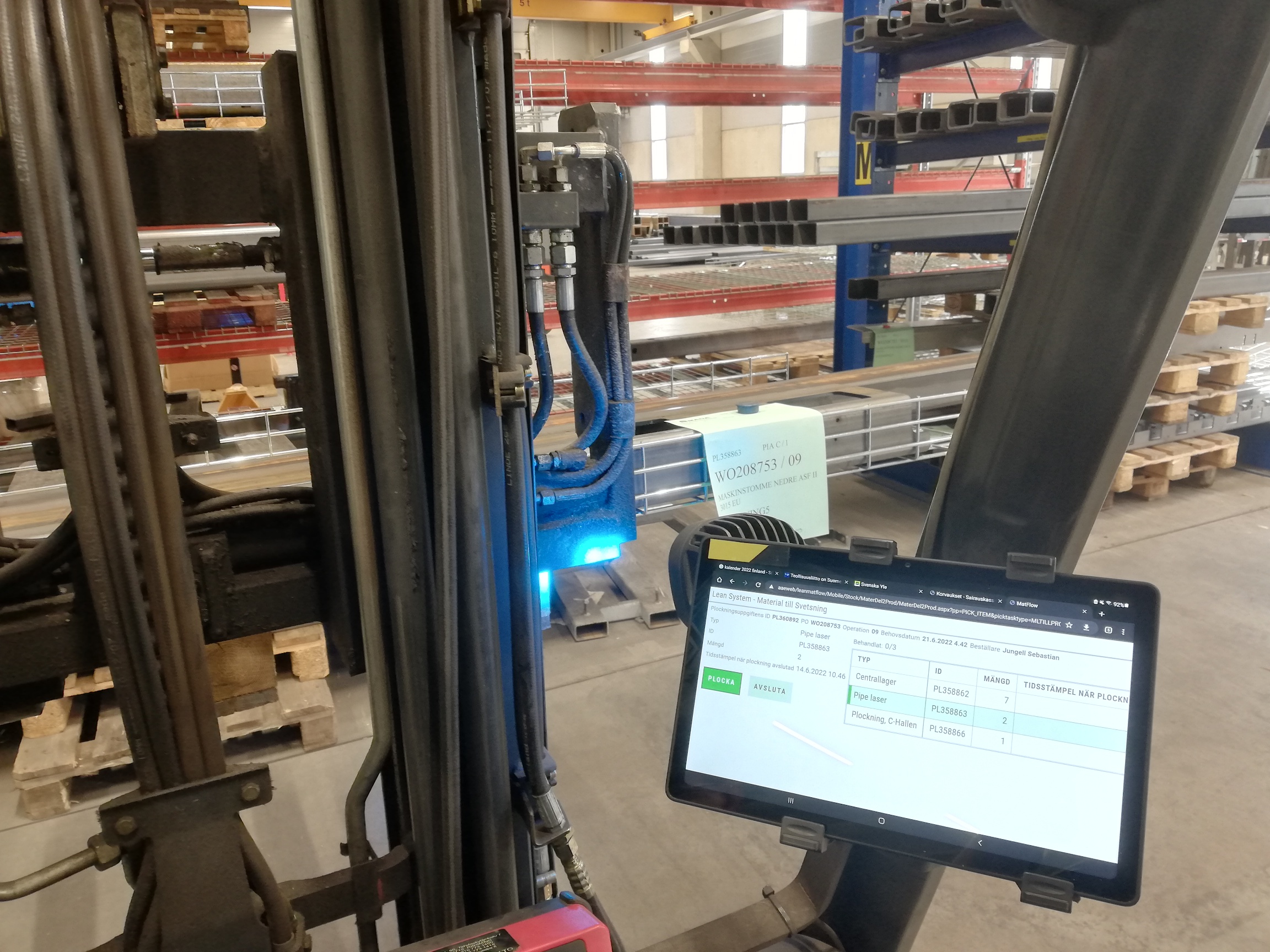
Figure 8 Example of “more buttons – more tasks”
Digitalisation is however also perceived as something that creates more work for the employees. The same app that creates more streamlined processes also makes it possible for the employee to initiate several types of tasks. Concretely, the many possibilities of the app are summed up in the slogan-like more buttons – more tasks. The more buttons the app possesses, the more possibilities it embodies for extra work tasks – tasks that earlier may have been the responsibility of other employees in the enterprise. These tasks may include administrative tasks like online registration, coordination, and communication on a product. The app thus makes some processes easier and creates less work, but simultaneously the number of work tasks increases, something which is not always clearly visible. This results in a reorganisation of the work.
This duplicity of “easier processes” and “increased work burden” may be perceived as full of tension since an employee may not want to highlight the extra work when other processes have become more agile. A tension is created that is being individualised in the employee, unless the enterprise recognises this tension and the “invisible” work.
We understand duplicity and ambiguity and the tension they create as co-creators of digital transition, because they contribute to creating specific rooms for action. These rooms may be difficult to handle because digitalisation both muddles and simplifies, clouds over and improves. These duplicities and ambiguities thus produce a complexity that makes it difficult to find the correct solution or the correct form of upskilling of employees.
TRANSITION TIP
Enterprises may want to develop a collective awareness on “the new normal”, where tension is part of the daily interaction with technologies.
Enterprises may want to develop a collective awareness on “the new normal”, where tension is part of the daily interaction with technologies.
This aspect is however not to be understood as our research arguing for a dismissal of ambiguities in enterprises. This, we think, is not possible, and secondly, not useful. On the contrary, our research highlights that enterprises may want to develop a collective awareness on “the new normal”, where tension is part of the daily interaction with technologies.
Duplicities and ambiguities: Voices from the field
“On one side digitalisation leads to more direct communication between the employee and the person in the company who needs help or needs some information. You don´t have to go through several layers, so less work. However, one of the downsides is that this smartness also creates more work – the more buttons on the machine the more tasks the individual employee has to do himself.” (focus group, July 2022, SMEs).
This present chapter discusses three analytical themes generated by the empirical data: narratives, agents of change, and duplicities and ambiguities.
These themes project a part of a view on working life during digital transformation. However, the themes analysed are not necessarily aspects that can be found in all enterprises, but they illustrate one of the research project´s ideas on how an enterprise can develop a curiosity for local circumstances that condition (bound) change.
TRANSITION TIP
Enterprises should develop a curiosity for local circumstances that condition (bound) change.
Enterprises should develop a curiosity for local circumstances that condition (bound) change.
3.4.2. Blended digitalisation circumstances – organisational factors
While bounded digitalisation circumstances describe the organisational factors that condition change, blended digitalisation circumstances describe some of the organisational forms that develop when human and non-human actors entangle, and by this entanglement obtains the power to act and thus reorganises the work in new ways. In the present project these organisational forms consist of two themes which we through our analysis find are characterised by specific qualities: transfers as new permanent practice, and the transition of organisational phenomena. The specific qualities describe the “presence” or the unfolding of the themes in an enterprise and may influence how an enterprise works on or navigates within the digital transition. This may for instance be related to financial priorities on organisational learning and choice of upskilling pathways.
The analytical findings below are presented in a random sequence – the presentation of the themes and their qualities are not listed with the most important or most significant first.
Transfers as new (permanent) practice
As the concept digital transition implies, society as we know it is changing. It is a gradual change, but it can be seen as quite radical since the finishing line is moving, as are the requirements for adjustment and upskilling. It is a process characterised by transfers to something else, but at the same time it can be observed as entangled with existing and known practices and processes. Within anthropology (Van Gennep, 1901/1960) transfers are sometimes described as liminal phases. These are phases that originally referred to temporary conditions like for instance the transfer from child to adult: a person has left childhood but has still not become an adult and is therefore in a liminal phase – a waiting “place” marked by past experiences, today´s circumstances and ideas about the future. Researchers on organisations have developed this liminal notion and conceptualised (Borg & Söderlund, 2015; Dille, 2022) it as a much less restricted phase. “The liminal” is understood in a more procedural manner and thus as a constant transfer phase.
In the present research project, we understand digitalisation as an example of a constant transfer phase because it is viewed as a transition that is perpetual in its creation, since the development never ends. Enterprises are in a permanent liminal phase, and “transfers” are thus the permanent new practice in the so-called fourth industrial age – industry 4.0 (Liao et al., 2017), in which enterprises must learn to navigate. We observe these liminal states as various transfers that are continuously visible in practice, and to and against which employees and managers are to orient themselves. These transfers contain certain qualities that may describe how transfers appear.
IN BRIEF:
The idea that transfers will stop will probably never be a reality. Digitalisation creates changes in the machine flow and the manual tempo in an enterprise: transfers from static to mobile processes, manual slowness as opposed to machinery. Change and transfer are the new normal. Work design and matching qualification requirements change rapidly; they create an upheaval that must be handled on a personal level. Changes may be perceived as taking “two steps forward and one step back”.
In our data we find three qualities, and one of these relates to the quality of displacement. This quality refers to how the primary content of work changes character during digital transition. Concretely, this entails for instance a displacement from primary experiences to secondary experiences. By this we mean that our data finds transfers from primary experiences on manipulating an element or component (make holes, grind, drill, and knock) to monitoring a digital steering and mechanical manipulation of an element or component – which is a secondary experience. Monitoring may be characterised as a secondary experience since the employee only supervises a machine that is programmed to manipulate an element, and the manipulation is thus secondary. This displacement may also be defined as a transfer from a tactile level – touch, feel, and sense – to a form of virtual level.
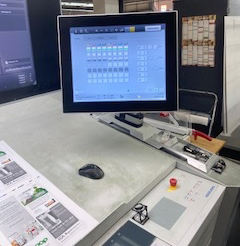
Figure 9 Example of a monitored process of mixing materials
Another quality that characterises the organisational form of transfer is non-progressivity, that is, processes that are not progressive. This quality typifies thus the process itself in the digital transition, and efforts enterprises make in the transfer from one machine age to another. Our data shows that the non-progressive is a quality within these transfers since the transition typically does not happen in a linear manner. Development does not happen in a continuous and progressive process but may rather be described as “two steps forward and one back”. This is for instance obvious in the way enterprises use automated robot arms to execute a task but are dependent on manual experience and internalised tacit knowledge for the assessment on whether the task is performed correctly, or if the manufacturing process must be stopped.
A third and last quality that we can find in our data deals with temporality – that is, a specific “flow” that is connected to the transfers that become visible during digitalisation and which influences the work tasks and activities to be performed. This may for instance be the constant “hum” of the machines, or specific discourses in the enterprise on growth, pace, and speed, or large, heavy machine robots in the manufacturing hall, that set a specific flow. As discussed in the previous chapter, temporality as a quality does not refer to any form of quantitative temporality, or linear time that is measured in hours, days, and weeks, but to experienced time. One of the temporal qualities that we can observe, and which is related to transfers, deals with a specific progression temporality. This temporality is synchronised to requirements and expectations on optimalisation and efficiency. It is a temporality – as such a specific flow – that entails giving some activities and work tasks a new meaning. This may for instance be in the transfer from static processes, where the employees typically stand at the same workstation/machine and perform the same type of task and activity, to mobile processes. In mobile processes the employee moves around between several workstations/machines and may, thanks to new monitoring systems and tablets, have the responsibility for several stations, and thus, because of his or her mobility (and speed) monitors or steers the continuous “manufacturing hum”.
Another temporal transfer quality that we find in our data co-exists with the identified progression temporality. It characterises a form of “hand temporality” – the specific flow that is contained within soft touches, adjustments, and fine motor skills to produce and refine a product. It is a temporality that is synchronised to the listening of sounds and the sensing of the room temperature and their influence on the manufacturing components at work. It is also a temporality that is developed through conversations between partners on angles, anomalies, specific manual challenges, etc. It is a temporality that in its unfolding usually is characterised by slowness and as such may compete with the pace, efficiency, and speed that mark the progression temporality´s direction towards efficiency.
TRANSITION TIP
Discuss some of the transfer qualities with the employees to strengthen their participation in the transition. Instead of walking “behind” the transition they can get the opportunity to walk “alongside” and contribute with valuable insight from their lived experiences.
Discuss some of the transfer qualities with the employees to strengthen their participation in the transition. Instead of walking “behind” the transition they can get the opportunity to walk “alongside” and contribute with valuable insight from their lived experiences.
When an enterprise during digital transition finds itself in a permanent liminal state – where transfers to something else is a new permanent practice – it may be meaningful to investigate what characterises these transfers, and what kind of influence they have on the degree of digitalisation in the enterprise, including the opportunities of employees to remain in the working life. In this way enterprises get the opportunity to access and explicitly reflect on some of the challenges that digitalisation brings. They may for instance have talks with employees on some of the qualities of the transfers and thus strengthen the employees´ participation in the transition. Instead of walking “behind” the transition they can get the opportunity to walk “alongside” and contribute with valuable insight from their lived experiences. These include insights into some of the effects that happen when people and machines entangle.
Transfers as new (permanent) practice: Voices from the field
“New technology is now being introduced, which requires a great deal of new knowledge from those who will be working on the floor. This results in greater time pressure at various points. With the new computer technology being introduced, it is important that everything works all the time – because there must be no downtime in production. It is a very fast pace when the new technology is adopted”. (interview, December 2022, managers, SME).
Change of organisational phenomena
Digital transition entails, as the concept implies, a change that has the digital aspect as a turning point. These changes result in new skills requirements or routines, that must be cultivated in the organisation. Digitalisation happens, however, in the tension between adjustment levels – that is, changes – and a true transformation – that is, an alteration or conversion of practice. According to research on digital organisational processes, we should pay specific attention to changes (Plesner & Husted, 2019).
The ways changes appear in organisations take many different forms. Completely new organisational forms can be seen, like for instance transfers becoming a permanent new practice, as discussed above. Another new form of organisation is the change of what we may call “classic” organisational phenomena like hierarchy, professional identity, and legitimateknowledge. Those are phenomena that through human and non-human actors´ entanglements are changed and understood in a new way.
IN BRIEF:
New constellations happen between digital technologies and knowledge in organisations, that challenge established hierarchies between employees and management. Technologies are for instance used to share information across employee and management boundaries. This shared insight has the potential of shaping the way decisions are made. The definition of legitimate knowledge favouring “IT-brains” is recognised, while manual skills are taken for granted. The shift from manual production to a function of monitoring and touching digital screens creates a transformation of professional identity from being in charge of one´s job to becoming a digital novice.
Hierarchy
Our data shows that the entanglement of human and non-human actors reorganises a phenomenon like hierarchy, since the divide between employees and managers becomes blurred. We can see an example of this in the new digital cooperation technologies. These technologies contribute to the sharing of information and the possibility to get an overview of processes, giving employees “on the floor” an opportunity to give comments to management and thus potentially influence managers´ communication to customers, how resources are prioritised, and other acts of management. For instance, it is possible to imagine that managers, informed by the insight made possible by technologies, choose to adjust a manufacturing process, since the employees´ opportunities for giving immediate feedback have made it clear that this specific manufacturing process delays the process, seems illogical, etc.
This means that the conventional lines of command sometimes change, and new rooms are created in which employees and managers can cooperate, which again leads to a revision of the enterprise´s classic understanding of organisational hierarchy. This does not mean that technology on its own contributes to better cooperation, or flattens hierarchies, when the employees get better opportunities to influence management. In some contexts, classic hierarchical structures are challenged, and employee participation is increased, in others the opposite happens. Even if our data finds that digital technologies create a change in the phenomenon hierarchies, it does not mean that technologies per se create more “equal” work relations and less control, only that relations are shaped in a different manner that results in a change of hierarchy in various ways. It means that the change indicates a transformation of hierarchical processes dependent on context and other socio-organisational factors, of which technology is a part.
Professional identities
Another change that we can extract from our data, and which reorganises the work by creating new processes, is linked to professional identities. This change is revealed when employees on the one hand experience some form of “deskilling” (Zuboff, 1988) and get the impression that technologies are taking over more and more of their work tasks, but at the same time have an expectation of “upskilling” (Zuboff, 1988). As such, this is a requirement to continuously re-qualifying their skills and routines. This “double pressure” of losing some of one´s usual work tasks and having to renew oneself can be seen as a change of professional identity. One example may be a vocational identity, which earlier was the dominant one in the manufacturing industries, that gradually changes into an IT-informed identity due to the double pressure discussed above, and thus in the long run experiences a real transformation of professionalism and a new professional identity. This transformation takes place for instance when new technologies require new forms of interaction between humans and machines. This may be a form of interaction characterised by the monitoring of technical processes (supervision) via a digital display, and the mastering of a simple coding language to initiate mechanical production (programming), rather than the execution of manual manipulations of an element/a component (grind, drill, adjust).
Some employees experience this professional shift as natural and as an exciting opportunity to learn new skills and obtain new professional competence. Others experience a loss of identity, legitimacy and meaning, and thus see this change as a struggle or as a great effort, contributing to a feeling of displacement or of no longer being valuable. These are topics identified in literature on professional identities (Brown, 2015), and which form the basis for the European Commission´s new value-based approach to digital transformation – industry 5.0 (European Commission, 2022).
Legitimate knowledge
A final change we have identified in our data is related to what is seen as legitimate knowledge in the organisation. The shift in legitimate knowledge is connected to professional identity, as the understanding of what is the most valuable or powerful knowledge has changed from “the knowledge of the hand” to knowledge about IT. This shift from the vocational to the IT-related is not directly related to the transition process of each single employee but is rather related to the internal negotiation process on what is the most important aspect of an enterprise. This aspect is defined by management in for instance financial priorities, recruitment, courses provided, topics that are discussed in meetings, and the words that are being used when talking about quality and processes.
What is “legitimate” is also defined by the employees, when for instance colleagues with specific skills are labelled “IT-brains” or “IT-experts”. However, it is also defined by the design of the physical manufacturing environment and for instance the relationship between the number of large, digital machines and humans (rooms empty of people), robot arms, displays, sounds of machines running, etc. In this way legitimate knowledge is something that “floats” in the organisation and is being negotiated between all these human and non-human actors.
Change of organisational phenomena: Voices from the field
“When you go from being the one in control, to suddenly becoming the one who can´t do anything right – the one who constantly must ask for help. It´s the same as when we old people start peeing our pants – a bit degrading, in other words (interview, December 2022, employee, SME).
The present chapter presents two forms of organisation that the empirical data has generated: transfers as new (permanent) practice and change of organisational phenomena.
The forms of organisation partly describe an image of the working life, and thus draw the contours of the digital transition even clearer, as these new forms challenge classic positionings in hierarchies, professional identities, and legitimate knowledge. This working life image offers insight that may be relevant for the ways enterprises, including employees and managers, navigate and make priorities in the digital transition. This may for instance be in relation to which fields of knowledge are being weighted, which employees are being recruited, and how employee well-being is being supported.
3.5. Summary of research findings – a working life image
As described above, discussions on digitalisation are often related to whether this transition contributes to job loss or new employment opportunities. Without contesting the relevance of these discussions, the focus of this present research project is elsewhere. In this project we have concerned ourselves with investigating the change itself and how it concretely is revealed in the working life, as well as its effects. We have done this by using sociomaterial optics to analyse the concrete interaction between human and non-human actors, that conditions and reorganises the work, as well as focusing on how employees and managers create meaning related to this interaction. This research approach may unfold something new since digital transition is an open process where nothing is decided in advance – neither technological utopias nor dystopias.
An approach to transition as an expression of human and non-human processes that are entangled, offers an opportunity to investigate it “holistically”. Thus, digitalisation itself is not explored, solely the contexts of which it is a part. This approach opens local effects and thus the consequences that the transition brings into the manufacturing enterprises. Some consequences belong to what is called the dark side of digital transition. Our analysis finds examples such as struggles with identity and the growth of specific bias in the organisation, or ambiguities that muddle employees´ experience of and access to the transition.
An important point in the analysis is however that these work reorganisations are from the start not viewed as “good” or “bad”, but they are always “political”, that is, not neutral. They are conditioned by specific organisational factors and shaped by specific forms of organisation that influence for instance employee well-being, communication flow, cooperation, recruitment, and which could have been different. As such they are reorganisations that enterprises may choose to change, given any unwanted consequences.
In the analyses we have identified relations and factors that influence the interaction between humans and machines. The analytical findings reveal local versions of digital transition, happening as gradual adjustments. The findings highlight that employees have valuable insights through their direct experiences with interacting with technology, that may support a transition process and potentially create stronger ownership of the process among employees. Finally, the findings uncover that enterprises may benefit from an increased holistic view on skills development during digital transition processes. Overall, the context phase results in findings that are in the enterprises´ interest to better understand to create evidence-based approaches and financial priorities on organisational learning and selection of upskilling pathways. In this way the analytical findings contribute to the discussions on how digital skills development could be handled.